
First Things First: Do Cats Really Get Bored… Especially Indoors?
The life of an indoor cat can be amazing. Being an inside cat provides safety and an unmatchable coziness in your shared space. The downside? The life of an indoor cat can also be boring. Being inside drastically limits opportunities for natural cat behaviors like stalking, climbing, exploring, and hunting. In the wild, cats spend their days searching for food and surveying territory. Indoor life can remove those beloved interests if we aren’t intentional about providing them as owners.
Short and simply put? Yes, cats really do get bored… especially indoors.

Common Signs Your Cat Might Be Bored
Excessive Sleeping
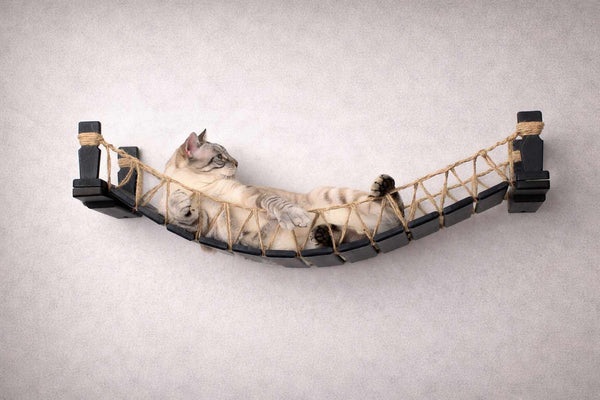
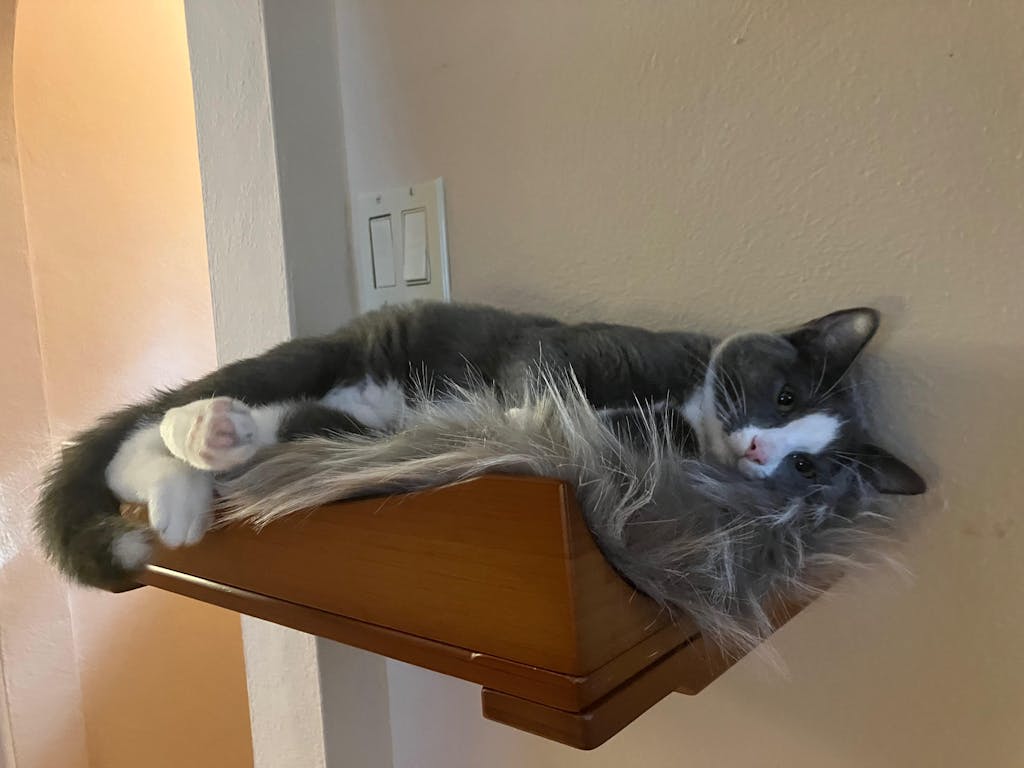
Owners searching, “How do I know if my cat is bored?” usually recognize their cat sleeping during wake hours instead of exploring, playing, or interacting. Lying belly-up for long periods of time is also a telltale sign of boredom.
Pro Tip: The Difference Between Sleeping vs Lethargy
- Normal sleep still includes alert periods, curiosity, and occasional bursts of activity
- Lethargy may include weakness, hiding, reduced appetite, or lack of interest in surroundings
- If you’ve asked yourself if your cat is bored or depressed, discuss persistent lethargy with your vet

Zoomies or FRAPs (Frenetic Random Activity Periods)
Sudden bursts of energy, commonly called zoomies, happen when pent-up energy has nowhere to go after being pent up during the course of the day. If your cat doesn’t have a healthy play outlet, you might instead catch them releasing that energy with random nighttime sprints or seemingly chaotic behavior. It might even come off as endearing or funny, but it could be an unfortunate sign of boredom.
Pacing, Overgrooming, and Repetitive Behaviors
Animal behavior studies show zoo animals sometimes pace when their habitats lack enrichment, and cats can show similar patterns when dealing with boredom. Excessive grooming, licking, or chewing fur can also be a sign of understimulation. Even if you don’t see the overgrooming firsthand, you might notice bald spots or irritated skin.
Destructive Behavior
Cats usually aren't destructive by nature; they’re searching for stimulation. If your cat is scratching furniture, knocking things off of shelves, chewing cords, or climbing areas they normally avoid, they could be bored.
Pro Tip: The Difference Between Play Cycles vs Aggressive Behaviors
- Play cycles typically include stalking, pouncing, chasing, and short bursts of movement
- Aggressive behaviors may involve hissing, biting, swatting, or sustained attacks

Increased Vocalization and Attention Seeking
Noticing a noisier home than you’re used to or a clingier-than-usual cat? Your cat could be trying to give you a message by meowing more. Maybe instead of meowing, they follow you around the house or interrupt you while you work, sleep, or go about your daily routines.
What Causes Cat Boredom?
Even loving homes can unintentionally create environments where cat boredom festers. Don’t get too hung up on this; indoor life simply lacks the variety cats instinctively crave. If your cat is bored, owners can usually tie it back to one of these catalysts:
- Lack of environmental enrichment
- Few opportunities for natural predatory behavior
- Routine monotony and long, solitary hours
Once you can identify the root issue, you can look for specific solutions.

5 Ways to Help Your Bored Indoor Cat
1. Make Playtime Interactive & Consistent
Short, frequent play sessions help reduce cat boredom. Wand toys, feather teasers, and chase games mimic the hunting cycle cats naturally enjoy.
If your cat is bored but won't play, try shorter sessions with varied toys or schedule play during your cat’s most active hours. Consistent daily play is one of the simplest solutions and a great jumping-off point (literally).

2. Provide Vertical and Physical Enrichment
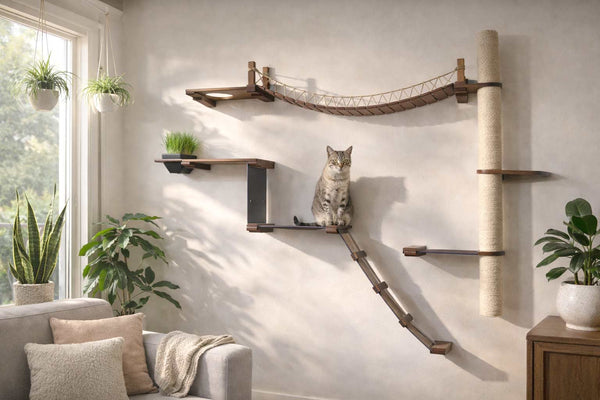
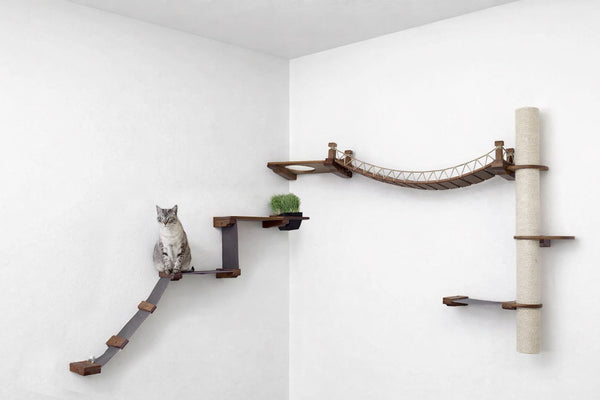
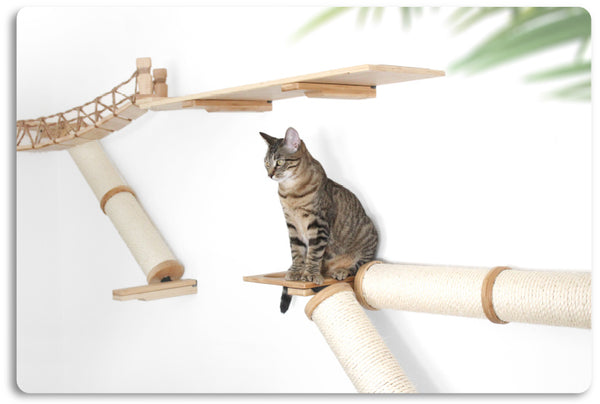
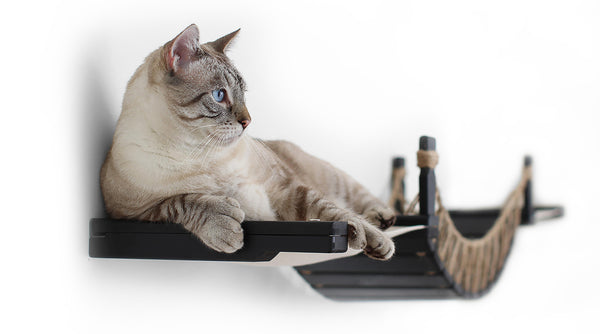
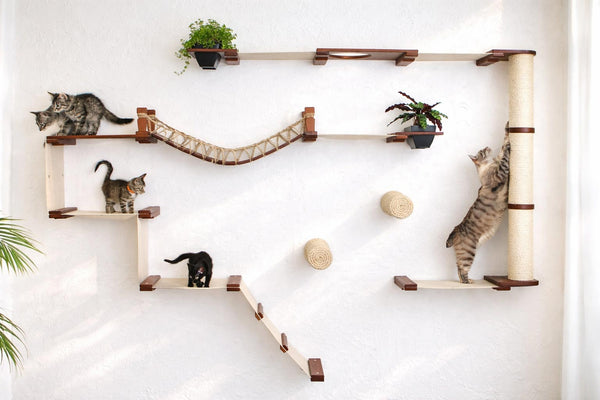
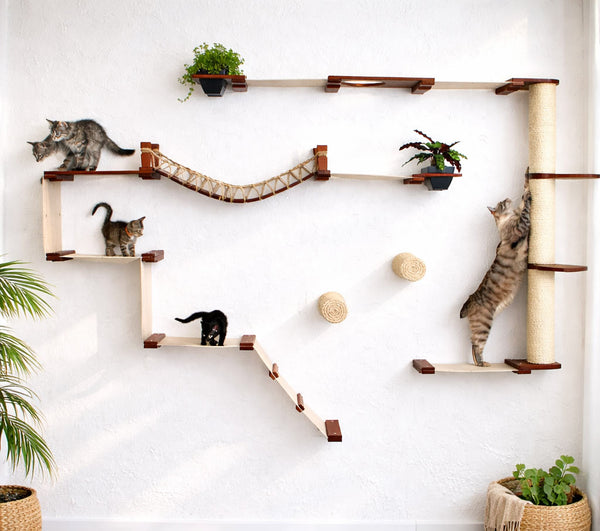
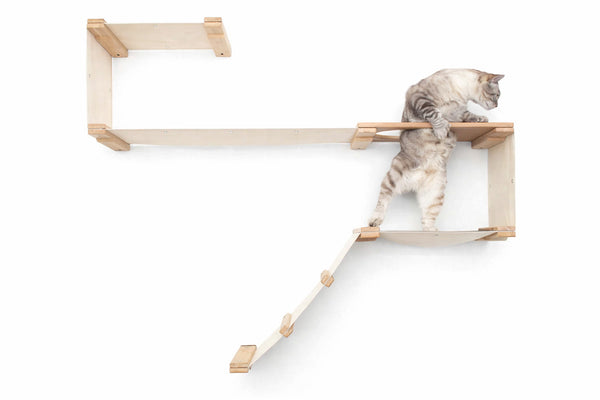
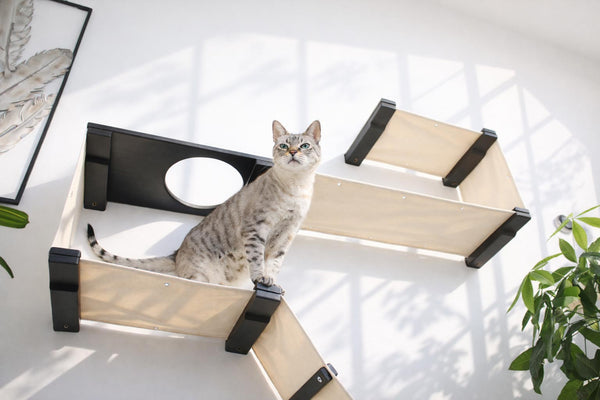
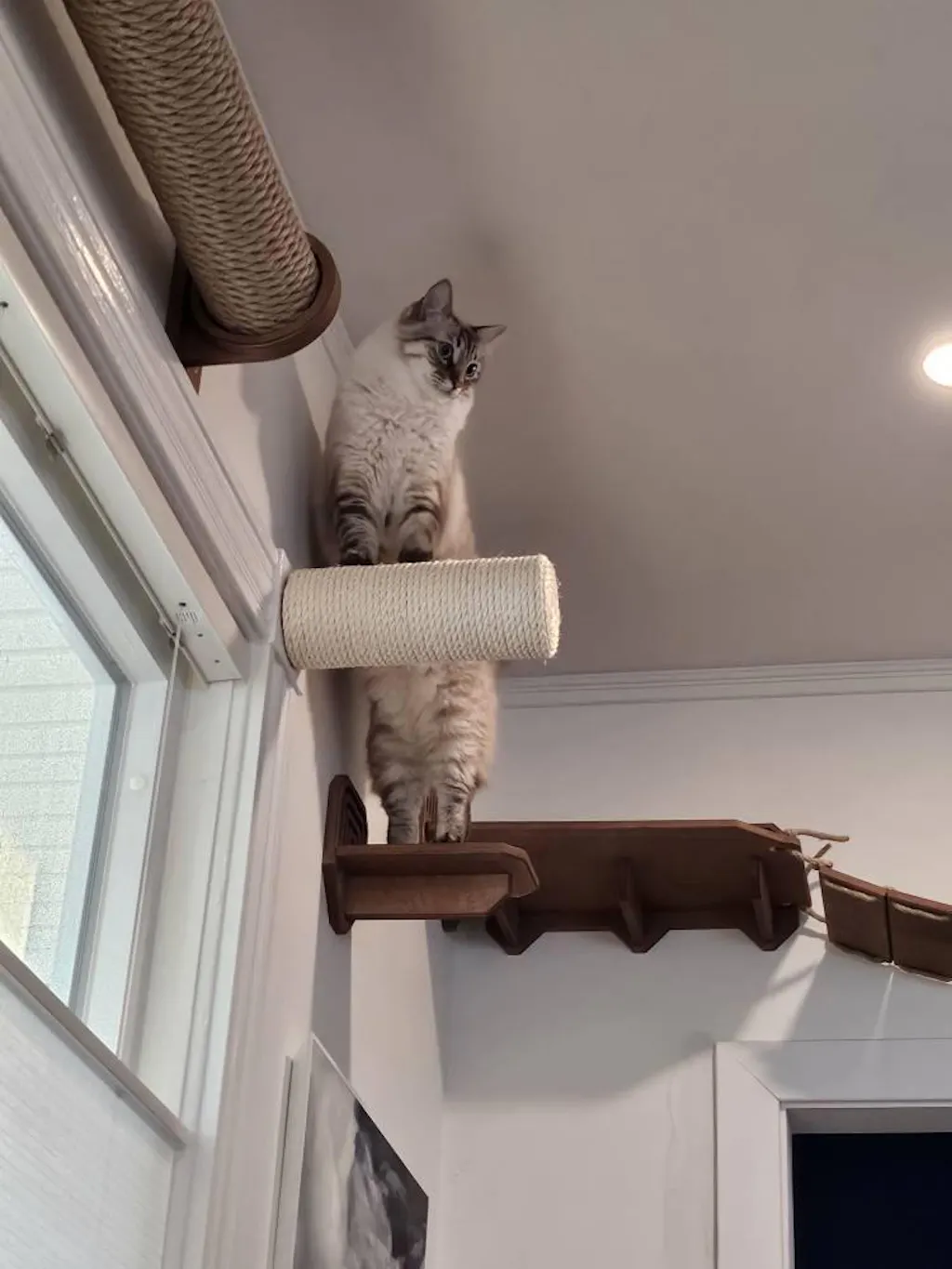
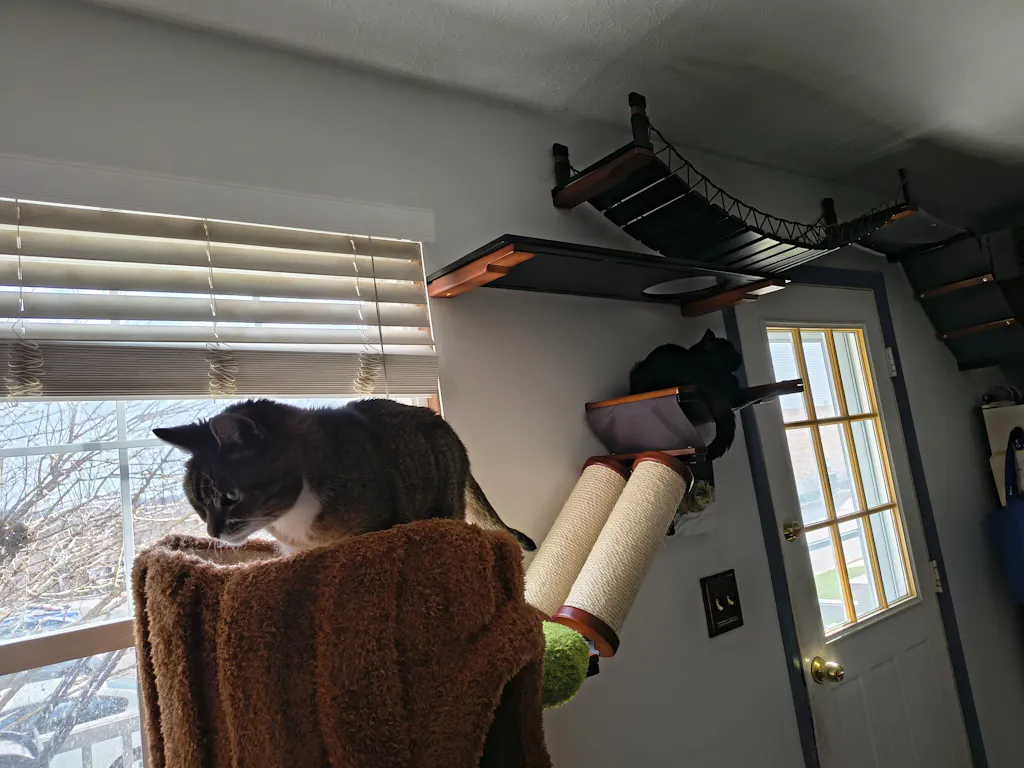
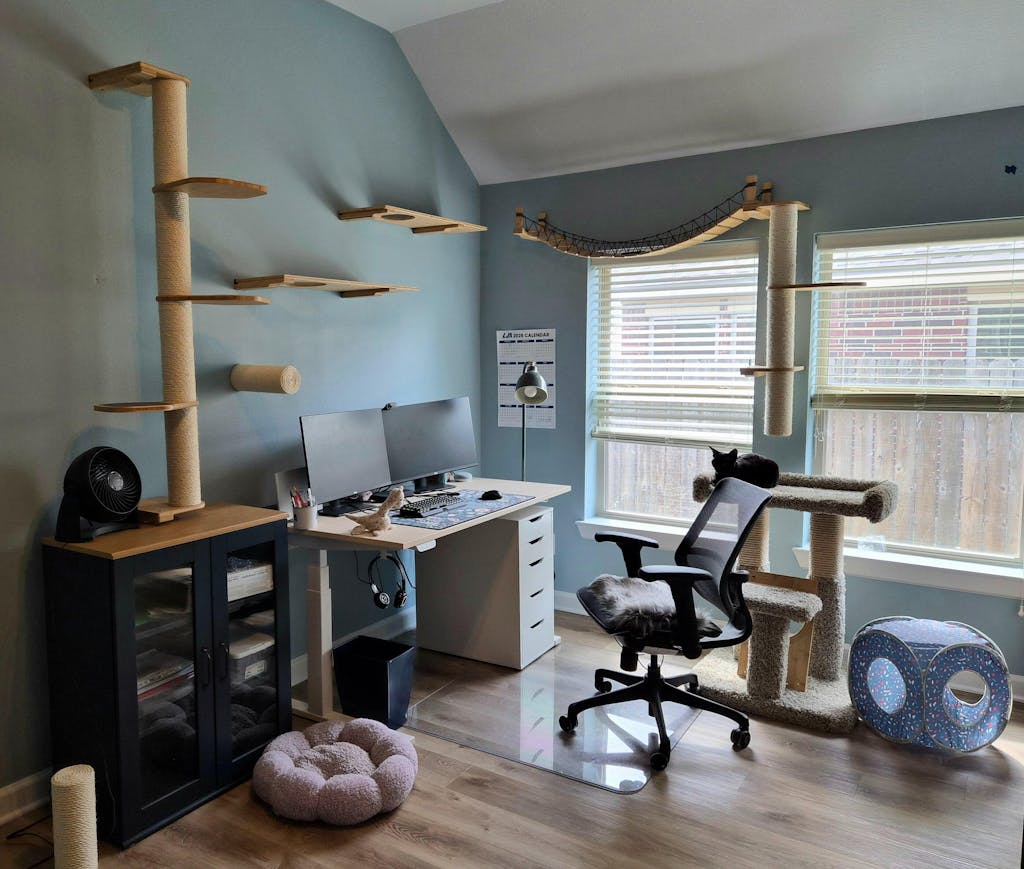
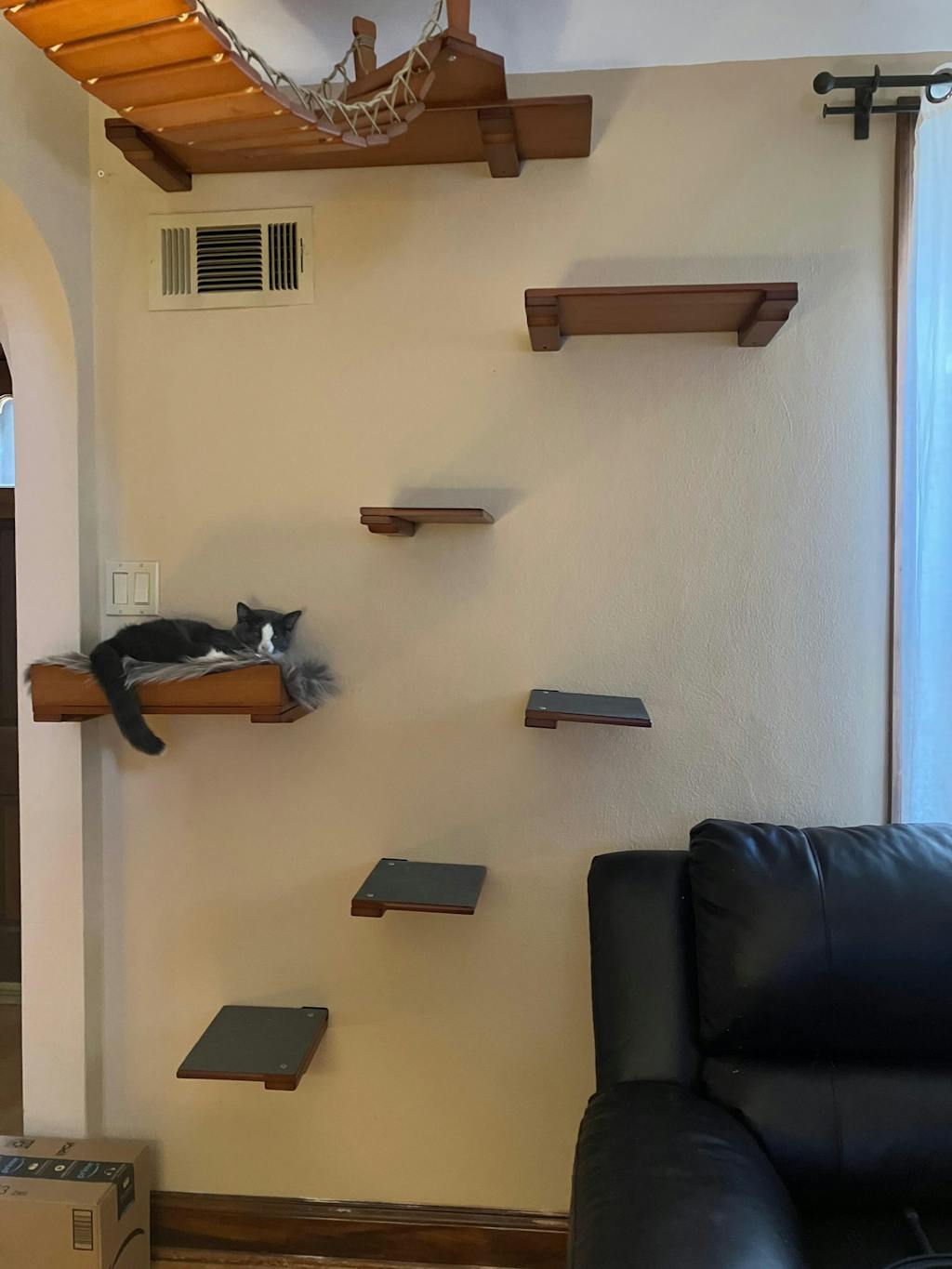
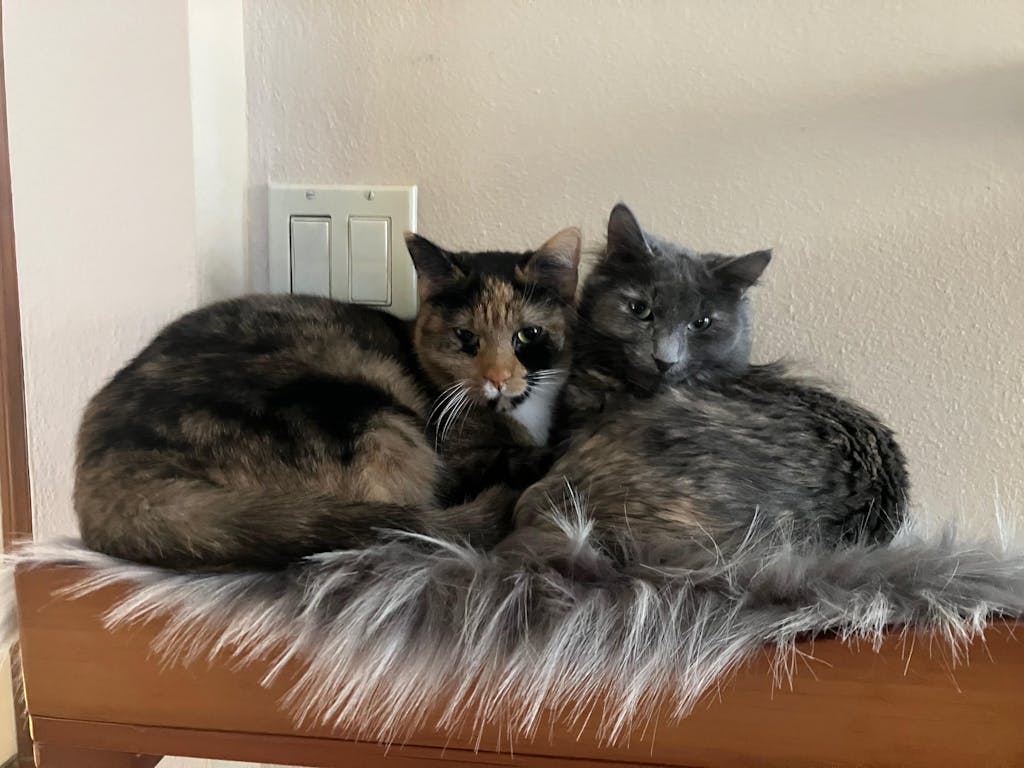
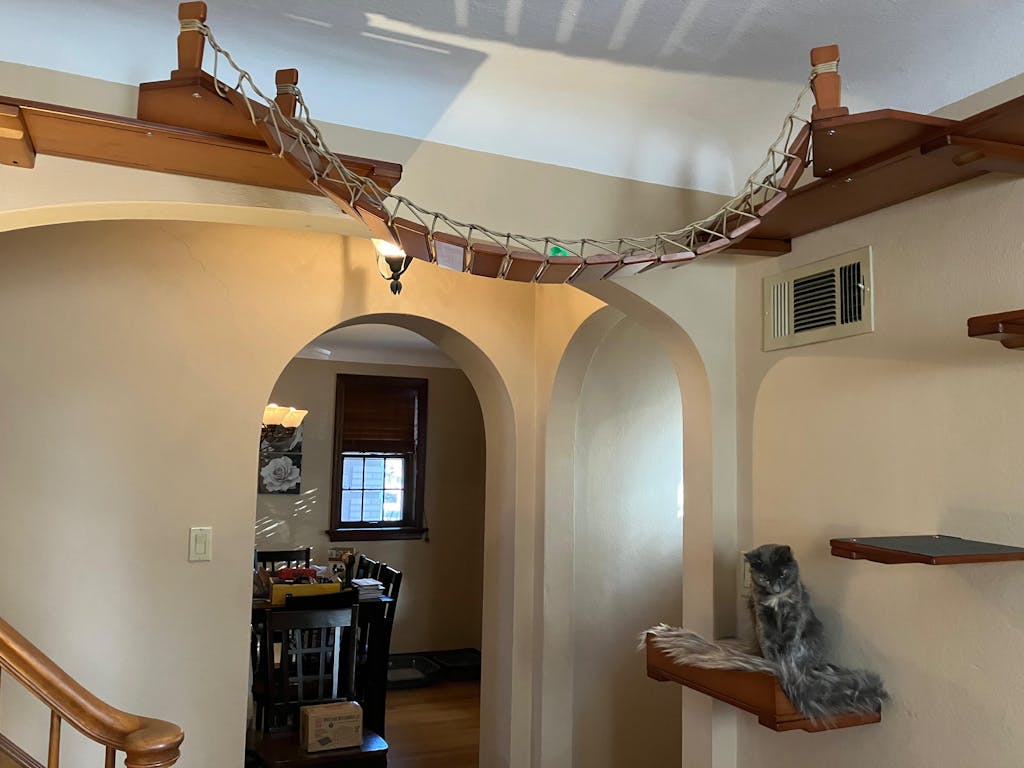
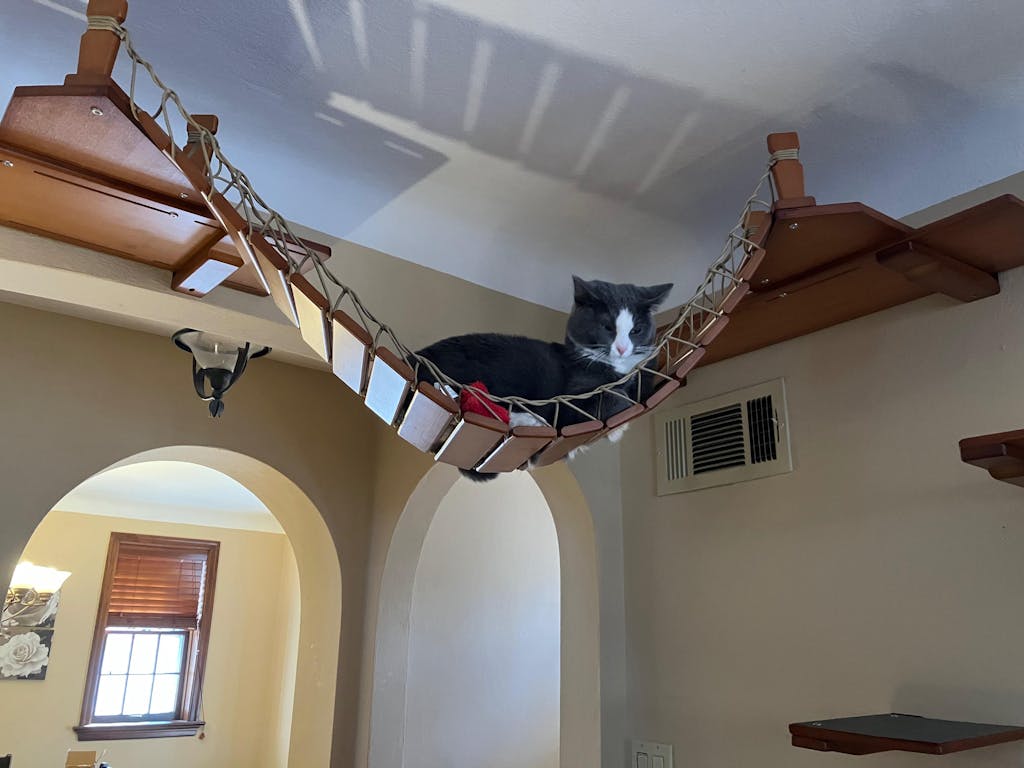
Cats instinctively love climbing and observing from high vantage points. Vertical cat furniture can help make this outdoor dream an indoor reality. Wall-mounted climbing systems and shelves give a safe place for cats to jump, perch, and explore new routes throughout the home.
3. Puzzle Feeders & Foraging Activities
Turning meals into interactive challenges helps combat cat boredom. Puzzle feeders encourage cats to work for food, mimicking the hunting and problem-solving behaviors they naturally enjoy.
Foraging toys, treat puzzles, and slow feeders can transform ordinary dinnertime into stimulating activities.
4. Window Views & Environmental Variety
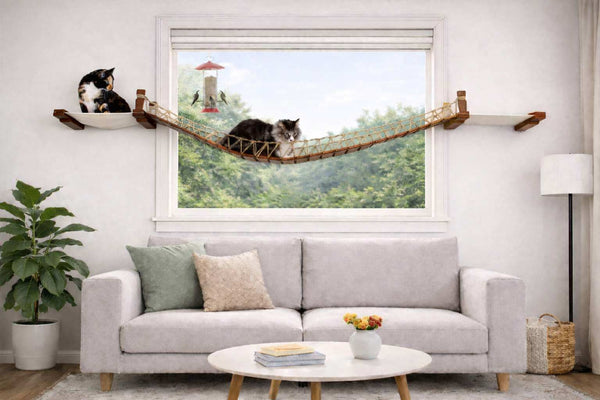
Outdoor sights and sounds provide natural stimulation… even for indoor cats looking out of windows. Birds, squirrels, passing people, and changing weather all create visual enrichment. Well-placed window perches or observation shelves let your cat catch glimpses of the outdoors without the danger of actually letting them outside.
5. Rotate Toys & Introduce Novel Objects
Just like kids or even adults, cats can get bored with the same toys time after time (this is also known as “habituation” in the cat world). Rotating toys every once in a while helps maintain novelty and keep your cat plugged into activity. Every few days is a solid cadence, but if you can, at least try to swap things out once a week.
Even ordinary household items can serve as a toy. Try introducing cardboard boxes or paper bags and start creating new exploration opportunities.
FAQs on Cat Boredom
When should I rule out cat boredom and look into more serious health concerns?
While cat boredom is common, sudden behavioral changes should always be monitored.
If you have a bored cat that is also dealing with symptoms like appetite changes, pain, hiding, or anxiety, it may signal a deeper medical issue. Conditions such as urinary problems, cystitis, or depression-like behavior may require professional attention. A vet visit is always the best first step if behaviors seem unusual or severe.
Is my cat hungry or just bored?
Some cats ask for food when they’re actually experiencing cat boredom, not hunger. If your cat is begging for food all the time, especially shortly after meals, they could be bored.
In turn, overfeeding can lead to weight gain, which is why boredom and obesity are often linked in indoor cats. Interactive feeding toys and scheduled play sessions can help redirect that energy.
Should I get another cat if my cat is bored?
Small changes to your cat’s environment can make a big difference in their daily happiness, activity level, and overall well-being. Getting another cat is not a small change. Before jumping to a multi-cat household, try to add play, environmental enrichment, vertical climbing spaces, and mental stimulation.