16 Plants That Are Toxic to Cats (With Pictures & Alternatives!)

16 Plants That Are Toxic to Cats (With Pictures & Alternatives!)

If you love plants and have a cat or are thinking of adding a cat to your family, it's important to be familiar with the plants that are toxic to cats. Some of these plants are common and non-toxic to us, making it surprising that they are harmful to cats. Unfortunately, cats don't automatically know to stay away from plants with toxins in them. They might chew and eat small portions and, depending on the plant, that can still be very dangerous. Below is a list of common plants or flowers that are toxic to cats with pictures.

Symptoms of Cat Eating Toxic Plant

cat with dramatic lighting
  • Vomiting and diarrhea (with or without blood)
  • Lethargy, acting sleepy, or low energy
  • Difficulty breathing (could be rapid or labored)
  • Frequent urination or excessive drinking (these can be a sign of kidney or other organ involvement)
  • Anorexia, loss of appetite, or decreased food intake
  • Abdominal pain (cat would be uncomfortable, tense, and sensitive to touch on the belly)
  • Irregular or fast heartbeat
  • Drooling and difficulty swallowing (could mean mouth/throat irritation or swelling)
  • Seizures or twitching
  • Coma

16 Indoor House Plants That Are Toxic to Cats With Pictures

lillies with bright blurred background

1. Lilies (Lilium & Hemerocallis spp.)

Toxic Component: All parts — even the pollen or water from the vase

What Happens: Causes acute kidney failure within 24–72 hours. Lethal if untreated.

Sago Palm

2. Sago Palm (Cycas revoluta)

Toxic Component: Cycasin — a potent liver toxin

What Happens: Leads to vomiting, diarrhea, liver failure, seizures, and death.

Oleander plant

3. Oleander (Nerium oleander)

Toxic Component: Cardiac glycosides

What Happens: Disrupts normal heart function; can cause drooling, vomiting, irregular heartbeat, and potentially fatal heart failure.

Azaleas

4. Azaleas & Rhododendrons

Toxic Component: grayanotoxins

What Happens: Causes vomiting, weakness, heart arrhythmias, and can lead to coma or death.

Autumn Crocus toxic plant with a blurred background of a cat sitting on a gate.

5. Autumn Crocus (Colchicum autumnale)

Toxic Component: colchicine and related alkaloids.

What Happens: Causes severe GI distress, multi-organ failure, and bone marrow suppression.

Red and yellow plant with symptoms listed on a clear blue sky background

6. Castor Bean (Ricinus communis)

Toxic Component: ricin, one of the most poisonous naturally occurring substances.

What Happens: Causes abdominal pain, drooling, tremors, seizures, and death.

Dieffenbachia Dumb Cane

7. Dieffenbachia (Dumb Cane)

Toxic Component: insoluble calcium oxalates.

What Happens: Causes intense burning, drooling, vomiting, and swelling of the mouth and throat.

A picture of a toxic plant (Philodendron)with a cat in the background.

8. Philodendron

Toxic Component: calcium oxalates.

What Happens: Similar symptoms: oral irritation, drooling, vomiting, and difficulty swallowing.

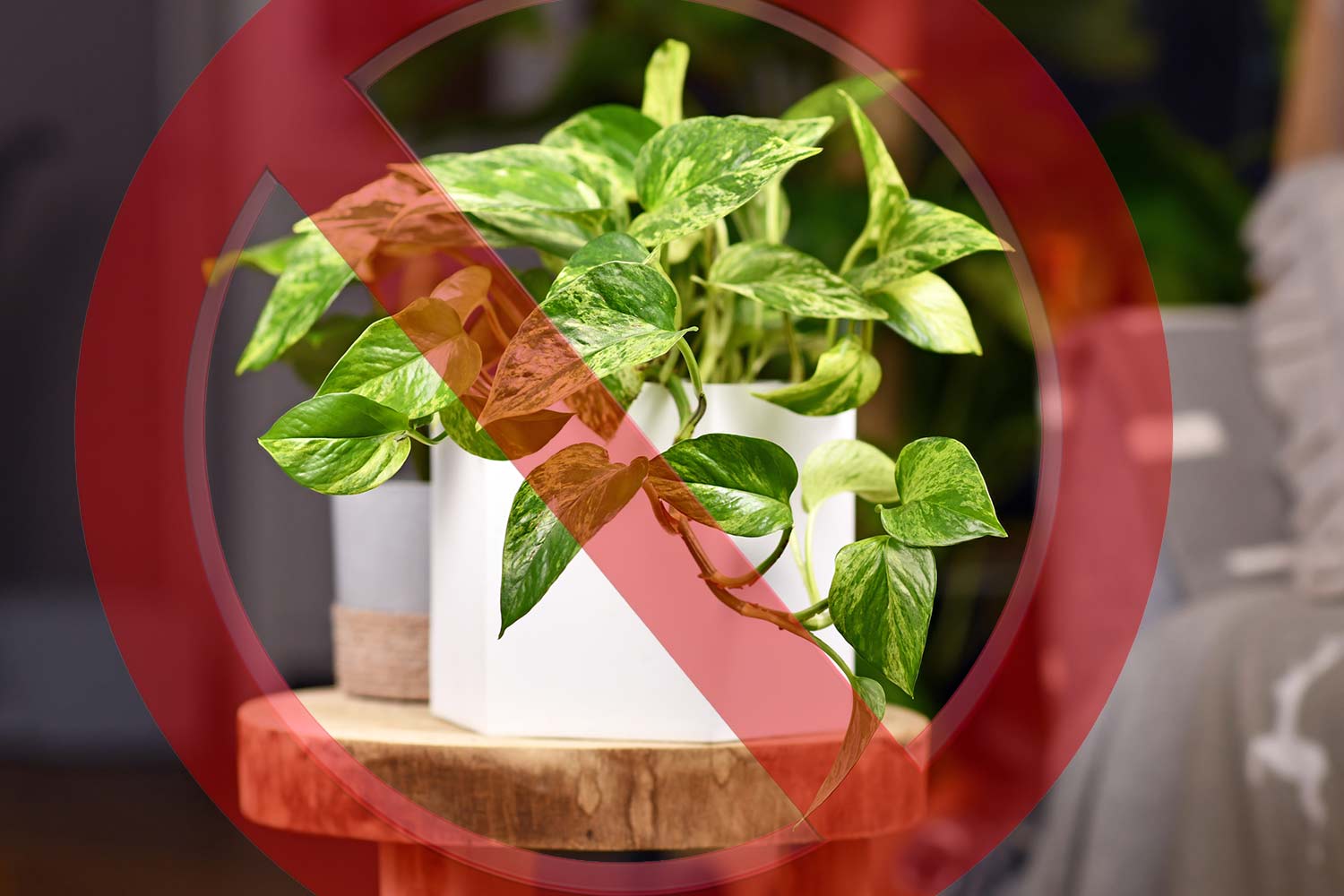
Pothos plant

9. Pothos (Epipremnum aureum)

Toxic Component: calcium oxalates.

What Happens: Causes mouth and tongue burning, drooling, vomiting, and respiratory distress in large exposures.

English Ivy

10. English Ivy (Hedera helix)

Toxic Component: triterpenoid saponins.

What Happens: Causes vomiting, abdominal pain, hypersalivation, and diarrhea.

red and orange tulip field

11. Tulips (Tulipa spp.)

Toxic Component: Bulbs contain tulipalin A & B.

What Happens: Causes GI upset, drooling, depression, and cardiac issues in large amounts.

Hyacinth Flowers in a pot

12. Hyacinths

Toxic Component: Similar toxins to tulips, concentrated in bulbs.

What Happens: Leads to intense vomiting, tremors, and increased heart rate.

Onion plant

13. Onion, Leeks and Garlic

Toxic Component: Disulfides and thiosulfates which is toxic to cats.

What Happens: Onions contain toxic components that damage red blood cells.

Cyclamen

14. Cyclamen

Toxic Component: terpenoid saponins, especially in the tubers.

What Happens: Causes salivation, vomiting, diarrhea, and heart rhythm abnormalities; large ingestion can be fatal.

Kalanchoe Plant

15. Kalanchoe

Toxic Component: bufadienolides, affecting heart function.

What Happens: Causes vomiting, diarrhea, lethargy, and in serious cases, heart arrhythmias or seizures.

Mistle toe

16. Mistletoe (Viscum album)

Toxic Component: The Loranthaceae family contains alkaline proteins, polypeptidic viscotoxins, and lectins.

What Happens: Causes necrosis of skin, vomiting, and diarrhea, fatigue, skin rashes. Chronic intake damages the liver and heart.

What to do if Cat Eats Toxic Plant

If your cat eats something toxic, time is critical. This guide walks you through exactly what to do step by step to keep your cat safe and give them the best chance at a full recovery.

Man handing a woman a bouquet of flowers with a speech bubble saying 'Here, take these poisonous flowers'.

Remove Access to Plant

Move the plant to a more secure place like the outdoors or gifting it to a friend.

Bouquet of pink tulips with a red prohibition sign and 'Tulips' text on a dark background

Identify What Was Ingested

Gather as much info as possible:

- Name of the substance (plant, medication, food, etc.)
- How much was ingested
- When it was ingested
- Packaging or label, if available

Contact a Vet or Poison Control

Call your vet, an emergency vet, or one of these 24/7 animal poison control centers:

- ASPCA Animal Poison Control: 1-888-426-4435 (fee may apply)
- Pet Poison Helpline: 1-855-764-7661 (fee applies)

Do NOT wait for symptoms—many toxins cause delayed but serious effects.

How to Have a Cat-Friendly and Plant-Friendly Home with Plants that are Not Toxic to Cats

But there are plants safe for cats, so you can have a cat ecosystem with non-toxic plants great for adding greenery to any room. While we have a long-tail list of non-toxic plants for cats to have around your house, here is our short list:

Cat peeking out from behind a window with plants in the foreground

1. Spider Plant (Chlorophytum comosum)

  • Air-purifying, hardy, and completely safe to have around cats.

2. Areca Palm (Dypsis lutescens)

  • Also known as Butterfly Palm, the Areca Palm is great for dry air homes and offices, as it's a humidifying plant.

3. African Violet (Saintpaulia)

  • Flowering house plant with a variety of colors, sometimes blooming in bi-color or multi-colored combinations.
Screened porch attached to a house with plants and furniture

4. Haworthia

  • A small, succulent lookalike to Aloe — but safe!

5. Boston Fern (Nephrolepis exaltata)

  • Lush, feathery fronds and non-toxic to cats.

6. Calathea (Prayer plant family)

  • Gorgeous leaves with natural patterns.
Close-up of pink and white orchids with a blurred background

7. Baby Rubber Plant (Peperomia obtusifolia)

  • Thick, glossy leaves and super low-maintenance.

8. Orchid (Phalaenopsis spp.)

  • Popular flowering plant that's safe for cats.

9. Parlor Palm (Chamaedorea elegans)

  • Classic indoor palm.

FAQs

How long does it take for a cat to have a reaction to a toxic plant?

The answer depends on the toxin, some can take minutes, others hours to show symptoms. If you suspect your cat of eating a toxic plant consult with a veterinary professional.

What is the most toxic plant to cats?

The Lily is at the top of the list for toxicity. The entire plant, including the pollen, is toxic. In research, it is reported a lethal dose for a cat is only two leaves or petals of the plant.

Do cats stay away from toxic plants?

Cats don't know how to avoid toxic plants. Unfortunately, there are many plants they did not evolve to be around in the home setting. As their caretakers, we need to ensure they are not around toxic plants.

A gray cat on a hammock with a Boston Fern

Your cat's curiosity doesn't stop at the windowsill, which is why it's so important to be mindful of the plants you bring into your space. Knowing which plants are toxic—and choosing cat-safe alternatives—helps keep your feline healthy while still letting your home flourish with greenery.

Looking for a stylish way to enjoy plants without putting your cat at risk? Check out our cat shelf planters designed with cats in mind—perfect for adding a pop of green with a pet-safe plant up and out of reach.

Quality workmanship, easily installed, and made by folks who really know cats.
MR

MaryAlice R.

Verified Buyer

collection of cat condos

Comments (0)

Leave a comment

Please note, comments need to be approved before they are published.