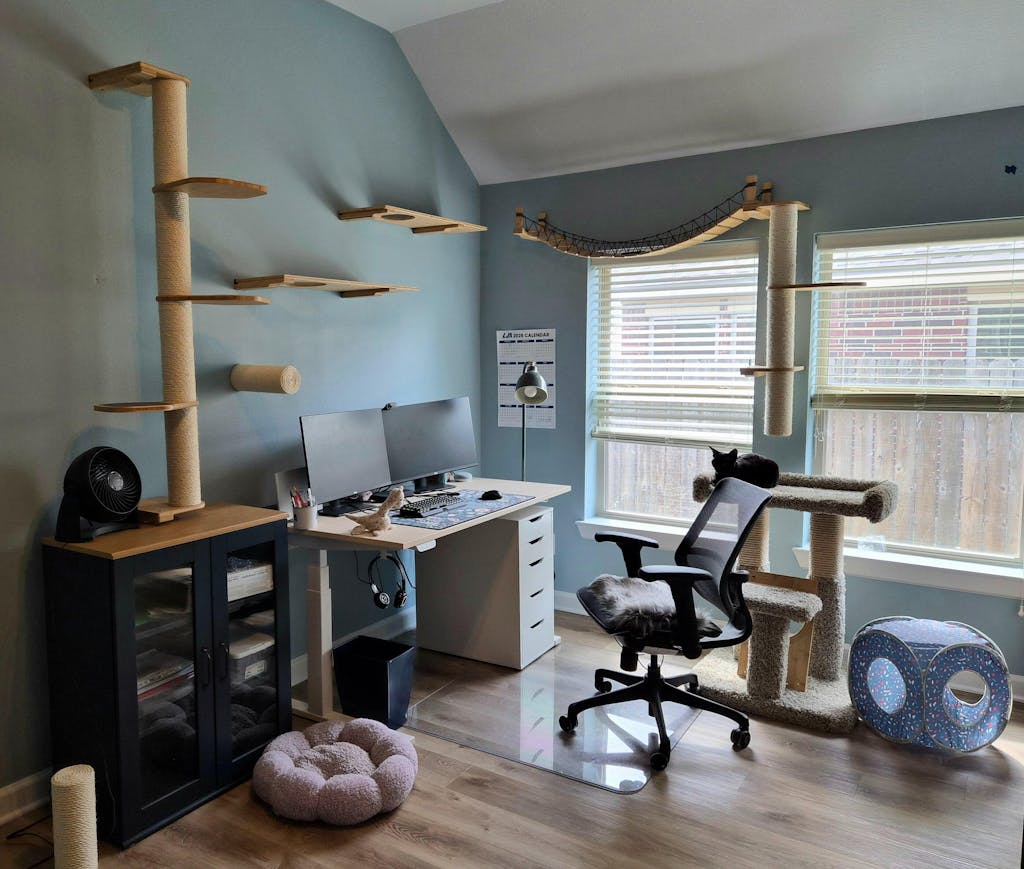
manual
Showing all 14 results

Corner Cat Trees

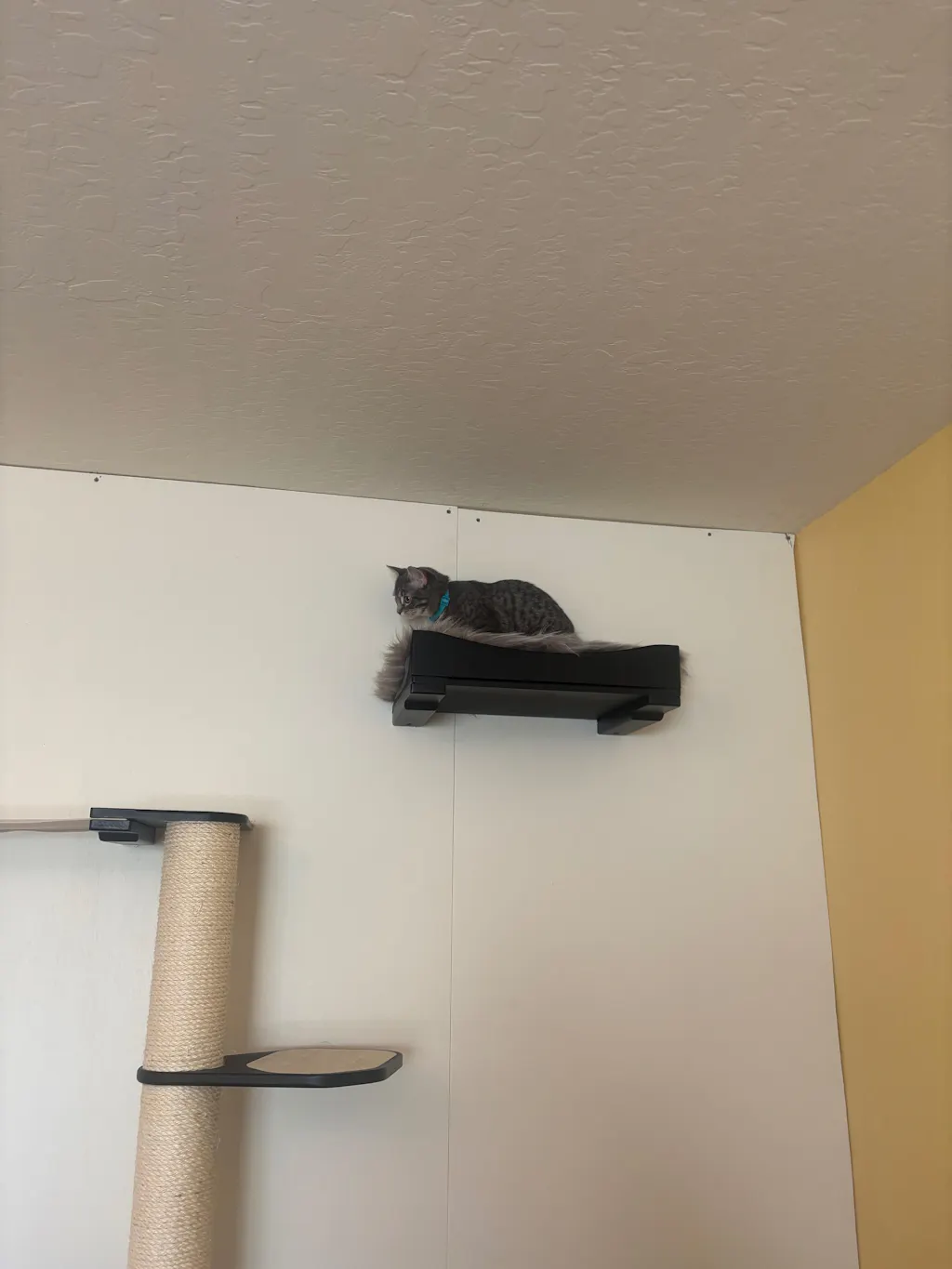
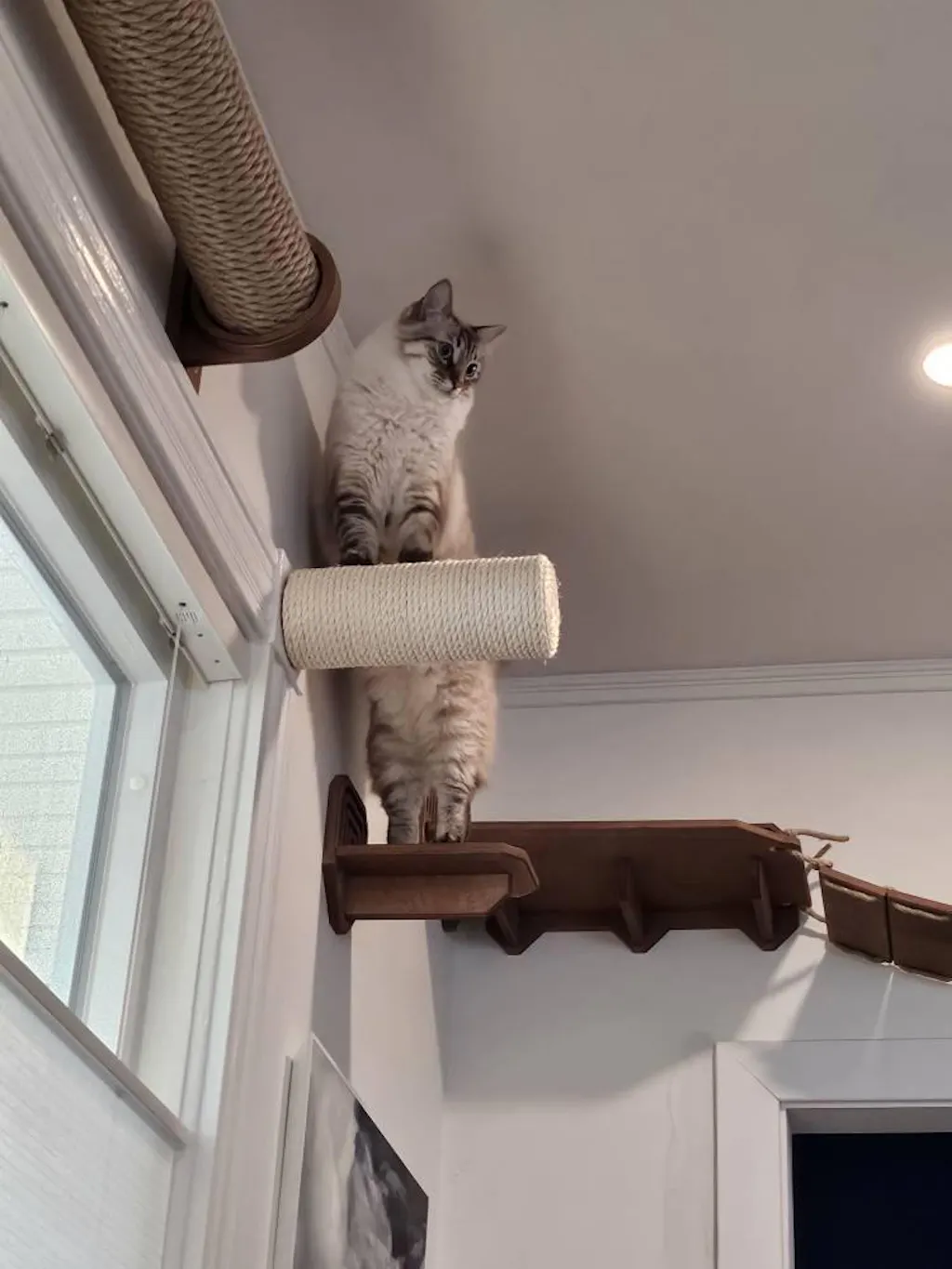
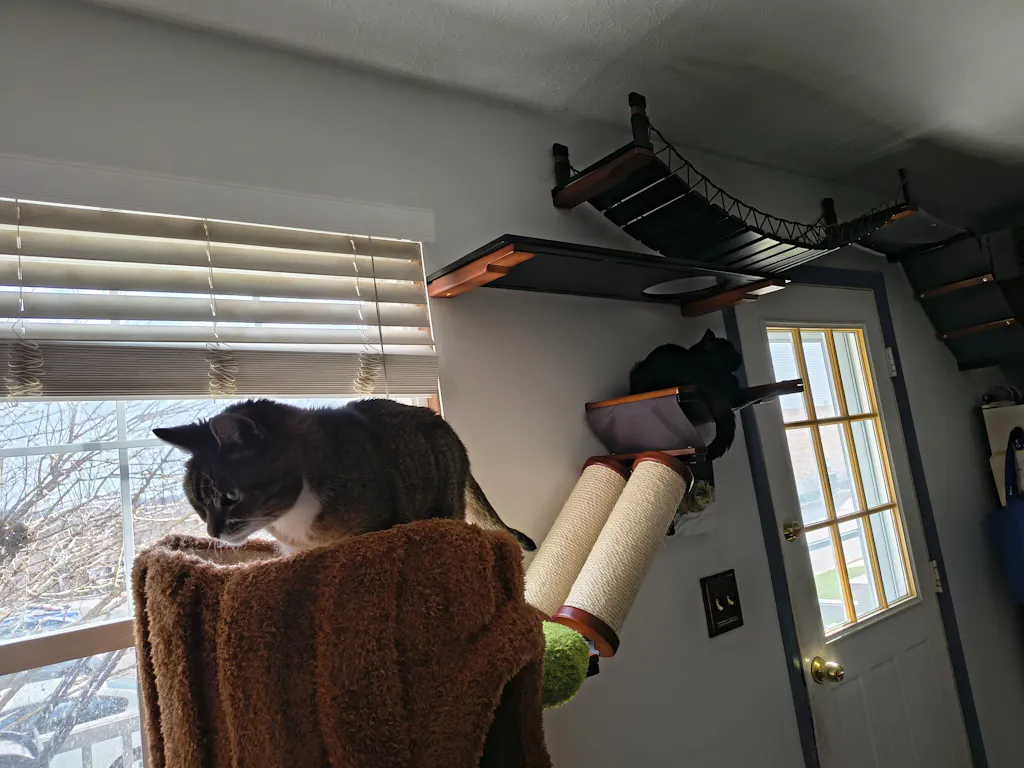
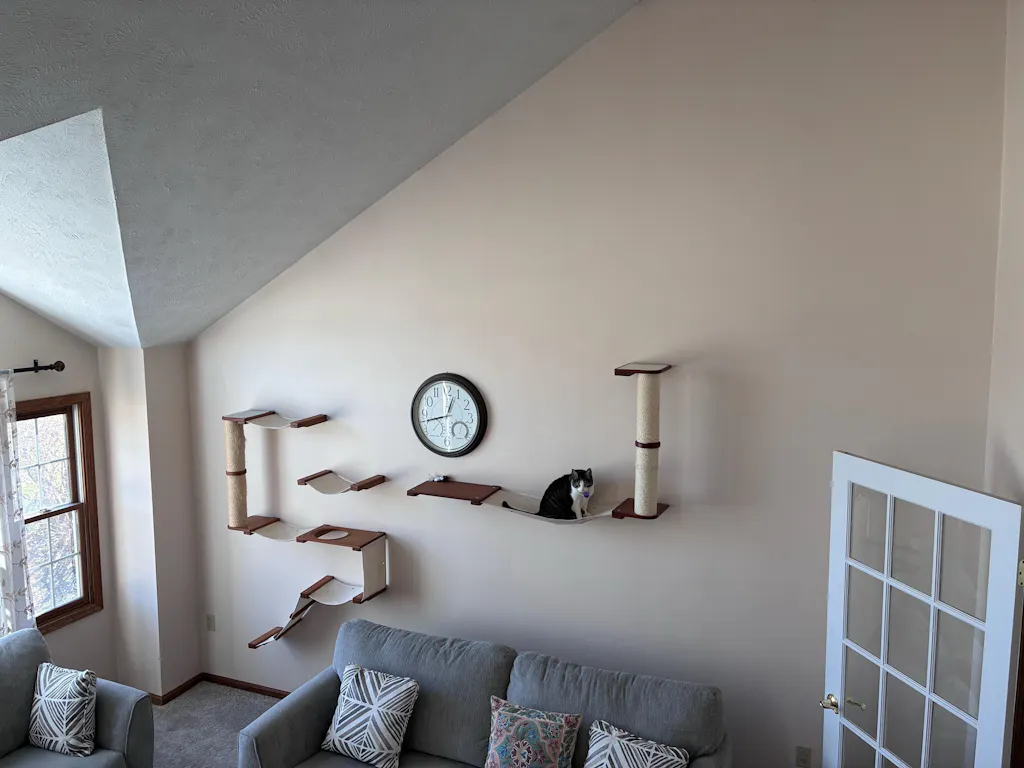
If you’re looking to maximize vertical space without sacrificing style or floor room, a corner cat tree is one of the smartest upgrades you can make to your cat-friendly home. Corners are often underused, but for cats, they’re prime real estate. Our corner cat trees are designed to turn those empty spaces into functional climbing paths, lounging zones, and observation spots for your cats!

Whether you’re designing a cat tree for the corner of a room, creating a climbing route between walls, or building a full corner wall cat tree, our modular pieces make it easy to customize your space for cats of all sizes, ages, and activity levels.

From statement pieces like the Gardens, CataCombs, Dakota, and Corner Bridge, to support elements like the Cat Climbing Shelf, 34” Slotted Shelf, and Vertical Scratching Pole with Leaf Shelves, each product works together to create a cohesive, enriching setup. 

Studs
Price
Mounting Location
Height
Width
Sort By
manual
manual
Showing all 14 results

Need Help Designing your Corner?

These condos and individual items are good start! Fill out our design form, and we'll suggest the best corner options for your space!

Best Seller

Cat Climbing Shelf

From $33.00
Best Seller

Wall Mounted Cat Shelf

From $56.00
Best Seller

The Cat Nest Bed

From $102.00
Best Seller

Cat Perch - Wall Mounted and Wooden

Regular price $45.00
Best Seller

Floating Cat Step for Wall

Regular price $39.00

Filters

Clear Filters
Studs
Price ($)
Mounting Location
Height
Width

FAQs on Corner Cat Trees

cats hanging out on a corner cat condo

Do these cat trees need to be in corners?

Not at all. While corners are a popular choice because they can be harder to fill with traditional furniture, our cat wall systems are designed to work just as well on flat walls, around doorways, or as part of a longer wall layout.

Corners can be especially useful for creating vertical paths and turning unused space into climbing routes, but they are not required for stability or function. Many customers use these pieces to build along a single wall, span across windows, or connect multiple areas of a room.

Is there a benefit to putting cat trees in the corner of a room?

Yes! Installing a cat tree for corner placement allows you to build vertically without taking up valuable floor space. Corners naturally support climbing paths, and give cats a sense of security since they are protected on two sides. Corners also work beautifully for specialized setups, like a corner cat tree with litter box below or a corner cat tree with feeding station elevated above the floor. 

Unfinished room with wooden walls and large windows showing greenery outside

Are there challenges that come with installing in corners?

yes, installing cat wall furniture near room corners can sometimes present extra challenges due to irregular stud placement. While most wall studs are spaced about 16 inches from center to center, this spacing often changes as you get closer to a corner. Studs in these areas are positioned to properly support the edge of the drywall sheets that meet at the corner, which can shift their spacing closer together or slightly off the standard pattern. In addition, room dimensions are rarely an exact multiple of 16 inches, which further affects where studs land. Because of this, mounting furniture near corners may require extra planning, careful stud locating, or slight layout adjustments to ensure a secure and properly supported installation.

Modern living room with a white sofa, coffee table, and decorative wall shelves.

How to create a cat corner your cat loves?

Most cats want three things: height, scratching opportunities, and comfortable places to rest. Begin with a main piece like the Gardens, or Catacombs, then connect paths using Cat Climbing Shelves or 34” Slotted Shelves. Vertical Scratching Poles with Leaf Shelves help guide cats upward while providing approved scratching zones. This is especially useful if you're designing a modern corner cat tree that looks intentional and not cluttered. For smaller spaces, a cat tree for corner of room setup with just a few staggered Cat Climbing Shelves or Floating Posts can still offer big enrichment.

Corner Cat Tree Reviews

⭐ ⭐ ⭐ ⭐ ⭐

Lyuba:

“First I would like to say that it is extremely sturdy and holds up our 18lb maine coon jumping from one shelf to another without wiggling. Second, the customer service is amazing!...Highly recommend it! Amazing quality, beautiful and fun design and great customer service!!!!”

⭐⭐⭐⭐⭐

Kristen:

“Setup for the catacombs took about an hour and fifteen minutes with two people working together. The materials used are really nice and blend perfectly with my apartment. My cats love this thing. They sleep on it, romp on it, wrestle on it, and just love it. It’s a cornerstone of their environmental enrichment, along with a window overlooking a busy city street and each other. When I move to a larger apartment with a bigger wall, I will likely add more components to this cat condo. Totally recommend to anyone looking to give their cats a great outlet to burn off energy and provide a fun playground without compromising floor space.”

Corner Cat Tree Not Quite Right?

Want your cat tree wall to cover more of your wall space? Check out our large cat trees.

Want to start with something smaller? Browse our
small cat tree collection.

How to Install a Corner Cat Tree

Although our wall mounted items are designed to be installed with little or no prior experience, it’s helpful to have prior experience using a power drill. Another thing that will help make your cat wall installation a breeze is having a second person assist during the process. 

Tools needed: power drill, stud finder, and pencil.

We’ve compiled everything you need to know to build the ultimate cat wall.  It’s always a good idea to review the process before starting your install, so please check out our links and see the video below to get a full rundown on the process.

tools icon

Installation Guide

A full walk-through of things to consider as you're installing your cat’s new habitat.

lightbulb icon

Design Tips

Tips to get the best furniture layout for your space and build the perfect habitat for your cat.

tools icon

Installation Guide

A full walk-through of things to consider as you're installing your cat’s new habitat.

lightbulb icon

Design Tips

Tips to get the best furniture layout for your space and build the perfect habitat for your cat.

Related articles

Building Your Cat Obstacle Course (& DIY Cat Wall Playground Ideas to Try!)

Building Your Cat Obstacle Course (& DIY Cat Wall Playground Ideas to Try!)

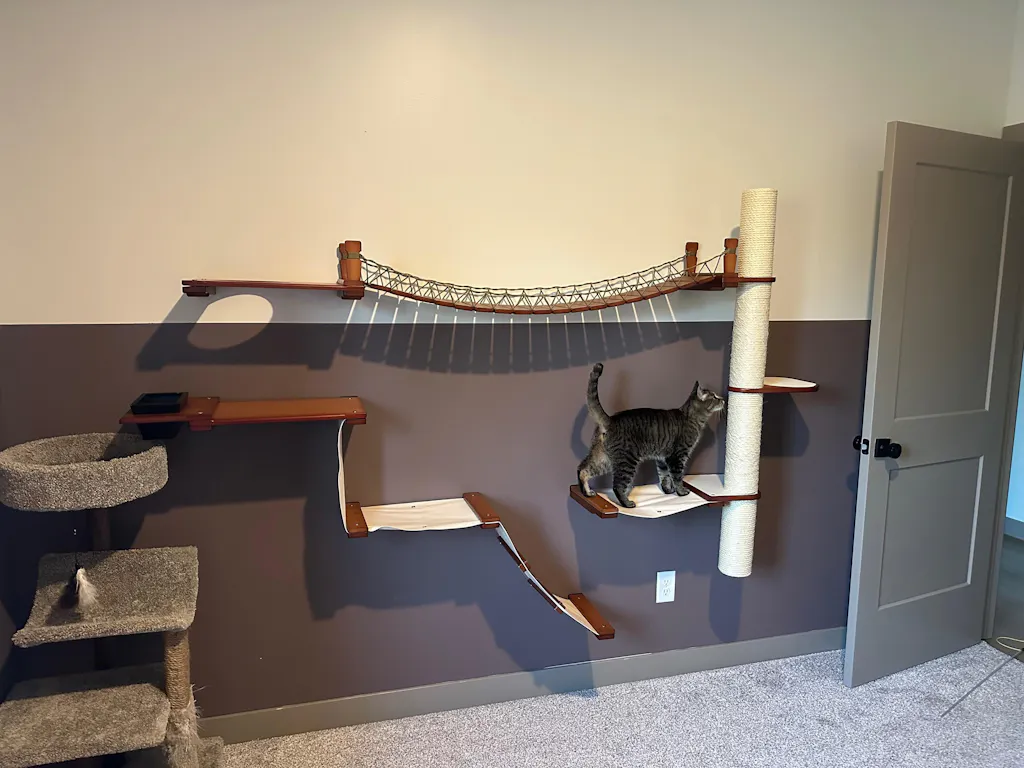
Creating a DIY cat wall playground is one of the best ways to give your feline a fun, safe, and enriching space indoors. Not only does it help prevent boredom, but it also keeps your cat active, supports their natural climbing instincts, and saves your furniture from their sharp claws. A well-designed cat obstacle course wall can turn any room into a cat's paradise, which is especially helpful for apartments where floor space is limited. See our article linked here about How to Build the Best Cat Playground & Jungle Gym. 
Whether you’re looking to build a full indoor cat obstacle course DIY cat wall playground or just want to start small with a few shelves, the possibilities are endless. Below, I’ll walk you through planning your layout, choosing furniture, and picking the right wall for your design. 
How to Build a Cat Obstacle Course 
Designing a cat wall obstacle course doesn't have to feel overwhelming. With a bit of planning, you can create a setup that challenges your cat's agility while keeping your home stylish. Here’s a simple step-by-step plan to get you started: 

1. Choosing the Best Room or Wall for your Cat
The best spot for your cat playground on wall is where your cat likes to spend time, such as: the living room, a home office, or bedroom. Does your cat like to lounge in the sun or watch birds out the window? If so, then I’d suggest choosing a wall that has a window you can work into the design. 
For small apartment DIY cat wall playgrounds, go vertical. Tall shelves and climbing furniture make the most of the limited floor space. See our blog about Where to Put a Cat Tree: Best Spots for Happy Active Cats for more suggestions. 
2. Measure Your Walls 
After picking which wall or walls you would like to use, it is time to measure your wall space and determine the wall type. 
Knowing your wall dimensions will help you in choosing products that will fit in your space. As for the wall type, most walls in the U.S and Canada are made of drywall attached to wall studs. 
Cement or brick walls are also common. Any of our furniture can be installed on cement or brick walls. These surfaces offer more flexibility since you can mount pieces anywhere. If you have this type of wall, you’ll need a ⅛” masonry bit and screws for installation.


Video Instructions


Installation Guide


3. Locate and Mark Wall Studs 
If you’re installing a wall mounted cat playground on drywall, the first step is identifying where the studs are, and marking them. You can choose to outline the edges of each stud, or place strips of painters tape to get a clearer picture of their spacing, which makes mapping out your installation much easier. Below are some helpful resources:


How to Locate Wall Studs


Our Recommended Stud Finder


Video Tutorial: Using a Stud Finder


4. Choosing Furniture 
Now that you know the size of your wall, and what you are working with, the fun part begins, picking out the pieces for your cat agility course! Our modular cat furniture is designed to be flexible, so you can either go with one of our ready-made layouts or mix and match pieces to create your own unique cat playground wall.
If you’d like a little guidance while planning, take a peek at our Design Tips, where we share useful tips on arranging furniture so everything works together seamlessly. You can also explore our pre-kitted condos for an easy starting point. 

5. Building a Custom Cat Wall 
Another fun route is creating a fully custom setup with our modular pieces, turning your wall into a DIY cat agility course. A good place to start is with an easy-access entry point, like a Cat Ladder, and then build out the path from there. You can add shelves or hammocks to give your cat cozy lounge spots or “highways” that connect different parts of the wall. Bridges are especially nice for spanning across window sills, giving your cat the perfect place to sunbathe or watch the birds. Adding Sisal Poles not only creates a built-in scratching zone, but also gives your cat the chance to climb vertically, bringing your cat playground wall ideas to life. For more inspiration and tips for creating a cat wall obstacle course on wall, check out the design blogs we’ve linked below. 

Helpful Design Blogs


Cat Wall Design & DIY Cat Wall Ideas


How to Catify Your Apartment


Cat Wall Climbing Systems your Cat will Love


Need more guidance? 
We’re happy to offer a free custom cat wall design to help bring your ideas to life. All you need to do is share a few details about your space, your budget, your cat's personality, and the style of furniture you like. From there, we’ll put together a layout that’s tailored just for you. 
Because our team is small, we can’t provide multiple revisions, but we’ll take extra care to create a thoughtful design we believe will work best for your home. Once it’s finished, you’ll receive a layout image along with a walkthrough video where we explain the design choices we made. 
If you’d like one, just fill out the form linked here with your details, and we’ll send your personalized design within 3-5 business days! 
DIY Cat Wall Playground Ideas
1. David’s Wall 


Difficulty Level


Moderate 


Space Needed


12 ft. wide, and 9ft tall space 


David’s build creates a fun and functional climbing wall for his cats, starting with an Angled Scratcher that offers easy access to multiple routes. One path leads to a cozy custom Cubby, giving his cats a private spot to relax. Usually our Cubbies come with Canvas on the top, but in this case, David chose to connect it to a 34” Shelf instead. The setup also includes a 4-tier Sisal Pole with a Floating Sisal Segment add-on at the top, paired with a Leaf Shelf that doubles as a sturdy perch. Our Sisal Poles can be customized with or without Leaf Shelves. To round out the design, David added a 34” Bridge and two 34” Nest, each paired with a Plush Bed for ultimate comfort, and finally, a 9” Cat Climbing Shelf placed by the window gives his cats the perfect lookout for bird watching. 
Products used in this design: 


4-tier Scratching Pole 


Angled Scratcher 


34" Slotted Planter Shelf 

18" Hammock 
34" Bridge

18" Planter Hammock 


18" Shelf 


34" Slotted Escape Hatch Shelf 


Floating Post 


9" Cat Climbing Shelf 


18" Nest 


34" Escape Hatch Nest 


Cubby parts: Canvas for Cubbies, 18" Hammock to use for the bottom portion. The Shelf above the Cubby will act as the top, so the Mounting Planks for the 34" Shelf will need to be installed 16" apart, by using the slots on the Shelf. 


 2. Lynnette’s Living Room 


Difficulty Level


Moderate 


Space Needed


Roughly 11 ft wide and 7 ft tall


Lynette's design gives her cats two different ways to start their adventure. On the left, three staggered Cat Climbing Shelves create a playful climbing route, while on the right, a floor-standing cat tree offers an alternate entry point. Connecting the two sides is a 34” Bridge, sandwiched between a cozy 18” Hammock, and a 1-tier Double Angled Pole on either side. Just above her chair, she added a Planter Hammock giving her cats not only a comfy perch, but also some extra greenery for enrichment and stimulation. 
Products used in this design: 

Cat Climbing Shelf
34" Bridge with Hammocks
1-tier Angled Double Sisal Pole
18” Planter Hammock 

3. Lynette’s Office 


Difficulty Level


Easy


Space Needed


Roughly 11 ft wide by 7 ft tall 


Lynette even created a smaller setup in her office, so her cats could keep her company while she works. They can climb up from the floor using a Cat Climbing Shelf, which leads them to a cozy 18” Hammock for lounging. Then they can slip through the escape hatch hole in the 34” Escape Hatch Planter Shelf, and make their way across the 50” Double Cat Hammock Bridge that stretches right over the window.
Products used in this design: 

18” Hammock 
Cat Climbing Shelf 

34” Escape Hatch Planter Shelf 

50” Double Cat Hammock Bridge


4. Lindsey’s Setup


Difficulty Level


Medium 


Space Needed


Roughly 12 ft wide by 9 ft tall 


Lindsey’s custom build gives her cats plenty of options, with three different ways to hop on: a 3-tier Sisal Pole on each end, and The Lift in the middle. From there, they can take a few different routes, like climbing The Lift up to a cozy 34” Nest for a nap, or scaling one of the Sisal Poles to reach the second level of the wall. At that level, they get to choose between relaxing in Hammocks, curling up in Nest Beds, or tucking away into a Cubby for some quiet time. 
Products used in this design: 


3-tier Scratching Pole 


34" Nest 

34” Escape Hatch Nest

18" Nest 

The Lift
34" Hammock
18" Escape Hatch Shelf
Cubby with Shelves

Floating Post


 5. Victoria’s Custom Build 


Difficulty Level


Medium 


Space Needed


Wall one roughly- 14 ft wide and 9 ft tall 
Wall two roughly- 8 ft wide and 9 ft tall 


Victoria’s custom build was designed with her whole family in mind. We started about 5 feet off the ground to keep it out of reach of their toddler, while still making it fun and accessible for the cats. Normally, we suggest starting an entry point around 10” - 15” from the floor, but this adjustment worked perfectly for her space. 
On wall 1, the cats hop to the Floating Post, then onto The Lift, which takes them to the top level. Up there, they can pick between perching on Shelves, stretching out in Hammocks, or curling up in Nest Beds for a nap. Wall 2 connects seamlessly from wall 1, or the cats can reach it directly by climbing the staggered Floating Posts. Once there, they can slip into the cozy Cubby to relax or scratch away on the Sisal Pole. 
Products used in this design: 
Wall 1: 

Floating Post
The Lift
18" Escape Hatch 
34" Bridge
18" Shelf
34" Shelf
18" Canvas
34" Escape Hatch Nest
34" Nest

Wall 2: 


Floating Post 

Cubby
18" Shelf
3-tier Sisal Pole

18" Canvas 

Mounting Plank Top and Bottom

Tips for Building an Adjustable Cat Wall Playground
How to make a platform safe for a cat?
When looking for a cat platform, safety should always come first. Make sure that the base is sturdy, and can hold your cat’s weight without wobbling. If you’re attaching it to the wall, anchor it securely into wall studs, not just drywall. Cover the surface with a non-slip material like cork or sisal to give your cat more traction when jumping or landing. 
What is the best material for cats to climb?
Cats love surfaces that mimic the textures they’d find in nature. Sisal rope, and sisal fabric are favorites for climbing and scratching, since they are rough enough to dig claws into, but durable enough to last. Carpet is another popular choice, though it can wear out more quickly.
How tall should a cat obstacle course be?
The height depends on your cat’s age, agility, and confidence. Most cats enjoy courses that range from a few feet off the ground to near ceiling height. A good rule of thumb is to start lower if your cat is new to climbing, then gradually build higher levels as they gain confidence. Ideally, give them at least a few elevated perches, since cats naturally love surveying their world from above. 
What textures and materials can cats not climb?
Cats are excellent climbers, but there are a few surfaces that tend to stop them in their tracks. Smooth metal, slick glass, and polished tile usually don't always give them any grip. Cats also dislike walking on sticky or crinkly textures, like aluminum foil or double-sided tape.
A DIY cat wall playground is one of the most rewarding projects you can take on as a cat parent. See our article about Cat Wall Benefits for more cat knowledge! From a simple cat obstacle course on the wall to a fully customized indoor cat agility course, your feline will love having a space designed just for them. Plus, it keeps them active, confident, and out of mischief. 
Let Us Design the Purr-fect Setup (For Free!)
Not sure where to start? We offer complimentary design help! Just share your budget, available wall space, and the types of furniture you’re interested in, and our team will put together a custom layout tailored to you and your cat’s needs.

Read More »
7 Cat Furniture Ideas to Make Your Cat Happy

7 Cat Furniture Ideas to Make Your Cat Happy

7 Cat Furniture Ideas to Make Your Cat Happy
Creating the perfect space for your cat goes beyond toys, and treats. It’s about designing a home that satisfies their natural instincts to climb, scratch, and lounge safely. Investing in cat furniture can help redirect unwanted behaviors, protect your couch, and give your feline a vertical playground they’ll love. 
Whether you’re exploring modern cat furniture, or need cat furniture for apartments, or are searching for cat furniture ideas that blend with your decor, this guide will help you choose pieces that truly enrich your cat’s life.


What furniture does a cat need?

When planning your home setup, you might wonder “What furniture does a cat need?” At minimum, cats thrive when they have options to climb, scratch, rest, and observe from safe elevated spots. Below are essential cat furniture ideas: 

Cat Trees & Condos
Cat Scratchers & Scratching Posts
Cat Shelves & Cat Bed Furniture 
Cat Bridges for Cat Wall Furniture
Cat Feeders and Planters
Cat Cubbies
Cat Wall Superhighways & Cat Climbing Walls


Benefits of Investing in Cat Furniture
Gives them something they are encouraged to play on (and scratch!)
Wondering “How do you keep your cat from scratching the furniture?” Redirecting their energy towards cat scratching furniture is one of the best solutions. While a cat furniture protector can help shield your couch, offering scratching posts, and cat tree furniture teaches your cat where scratching is encouraged. See our blog here for more call wall benefits! 

Enhances Mental and Physical Health
The best cat furniture keeps cats active, and mentally stimulated. Products like wall mounted cat furniture, cat bridges, and climbing shelves give indoor cats a safe outlet to jump, perch, and observe, similar to the wild behaviors they’re wired for. See our blog here for more tips on keeping your cat enriched. 
Saves Your Furniture from Damage 
From cat hair removers for furniture to cat furniture protectors, there are many ways to safeguard your space, but adding designated cat furniture for walls or luxury cat furniture does more than protect, it redirects scratching, and climbing behaviors to safe spots, reducing future damage. See our blog here for tips on designing a cat room. 
The Best Ideas for Cat Furniture
1. Cat Trees 
Cat tree furniture is a staple in most cat-friendly homes. These towers mimic trees in nature, giving cats high perches to nap and survey their territory. Beyond lounging, they provide essential vertical space for climbing, scratching, and playing. Activities that keep cats physically fit, and mentally stimulated. 
Price Range: $50 - $1,200 | The price range heavily depends on if you choose the DIY route or if you are looking for more luxury items. If you’re considering DIY, see our blog here for other catification projects! 
Where to Put Cat Trees | Near windows, or quiet corners to encourage climbing, and sunbathing. 
What to Look for in Cat Trees | Stability, multiple levels, sisal posts, and materials that match your home's style.
Our Top Picks for Cat Trees: The cat trees below provide napping, scratching, and perching areas. Either with stable bases, or are wall mounted directly into wall studs.

2. Cat Scratchers & Scratching Post Furniture
Cat scratching furniture is essential for maintaining healthy claws, and preventing couch damage. Scratching is a natural feline behavior, it helps cats shed dead nail layers, stretch their muscles, and mark territory through scent glands in their paws. Without appropriate outlets, many cats turn to sofas, rugs, or wooden furniture, leading to frustration for both you and your pet. Offering dedicated cat scratching furniture like sisal posts, or wall mounted scratching panels can redirect behavior to safe, durable spots meant for scratching. 
Price Range: $20 - $300 
Where to Put Cat Scratchers | Next to sofas, or entryways where cats already scratch. 
What to Look for in Cat Scratchers| Durable sisal, heavy base for stability, or wall mounted, replaceable scratching panels or segments. 
Our Top Picks for Cat Scratchers & Scratching Posts | The scratchers below are wall mounted, and made out of bamboo, and durable sisal rope. They also have replaceable scratching segments or mats. 

3. Cat Shelves & Cat Bed Furniture
Cat shelves, and cat bed furniture lets cats climb walls while doubling as cozy resting spots. Perfect for cat furniture for apartments where floor space is limited. Cats naturally love to observe their surroundings from elevated areas, and wall mounted setups give them a sense of safety and control over their environment. 
Price Range: $40 - $500 | The price can vary significantly depending on whether you decide to take the DIY approach or invest in more high-end, luxury pieces. 
Where to Put Cat Shelves | Above existing furniture, windows, or integrate them into cat wall furniture ideas for vertical play. 
What to Look for in Cat Shelves | Strong mounting hardware, cushioned beds, and modular options to expand later. 
Our Top Picks for Cat Shelves | The below items are wall mounted and weight tested to hold up to 65 pounds. They have the option to add Plush Beds, and are modular, so you can easily add onto your cat wall later on. 


4. Cat Bridges for Cat Wall Furniture

Price Range: $60 - $600 | Cost can range quite a bit based on the style you’re after. 
Where to Put Cat Bridges | Connecting shelves, or over windows for lounging, and bird watching.
What to Look for in Cat Bridges | Sturdy wood, secure brackets, and enough width for larger cats. 
Our Top Picks for Cat Bridges | The below Bridge is made out of durable bamboo, and metal brackets. They are wide enough to accommodate larger cats comfortably, and are modular, so you can add to them later down the line. 


5. Cat Feeders and Planters 
Elevated or wall mounted cat feeders provide cats a safe place to enjoy their meal away from dogs that may be in the home, while wall mounted planters provide cats the option to forage in the greenery. 
Price Range: $20 - $250 | Pricing varies depending on your approach. If you’re handy and like crafting things yourself, building a custom piece can be a budget friendly option. On the other hand, opting for pre-made, upscale furniture will naturally cost more, but provides a refined finished design. 
Where to Put Cat Feeders | Near main living areas, but away from liter zones. 
What to Look for in Cat Feeders | Spill-proof bowls, adjustable height, and integration with other modern cat furniture. 
Our Top Picks for Cat Feeders | The below products are easily integrated with other wall mounted items, and can be mounted at any height! The Elevated Feeder can be added to any of Catastrophic Creations items! 

6. Cat Cubbies
Cubbies offer private hideouts for shy cats or quiet nap times, giving them a safe retreat where they can fully relax without disturbances. Many luxury cat furniture designs include integrated cubbies lined with plush, soft interiors for maximum comfort. Beyond serving as a cozy nap spot, cubbies also help reduce stress by providing a dedicated escape when guests visit or during loud household activities. 
Price Range: $30 - $400 | The cost largely depends on how you choose to proceed. If you enjoy DIY projects, and have the skills to create your own, crafting a custom piece can save you some money. Alternatively, selecting high-end, ready-made furniture usually comes with a higher price tag but offers a polished, and sophisticated look. 
Where to Put Cat Cubbies | Bedroom corners or as part of a larger cat climbing furniture layout. 
What to Look for in Cat Cubbies | Soft, washable fabric, and multiple points of entry. 
Our Top Picks for Cat Cubbies | The Cubbies below can have a Plush Bed added to them for more comfort, and can easily be removed for cleaning. Either side of the cubby will provide a point of entry.

7. Cat Wall Superhighways
These modular systems combine shelves, bridges, and hammocks, to create full cat wall furniture ideas. They're a stylish way to give your cat vertical territory without bulky towers. 
Price Range: $150 - $1,500 | Pricing will differ based on your chosen method. If you’re skilled and prefer to build something yourself, a custom DIY project can be a more affordable option. Conversely, purchasing premium furniture tends to be pricier, but delivers a sleek, professional finish. 
Where to Put Cat Superhighways | Hallways, living rooms, or stairwells. See our blog here about adding a stairwell safety net. 
What to Look for in Cat Superhighways | Expandable design, strong stud-mounted brackets, and smooth climbing routes. 
Our Top Picks for Cat Superhighways | The condos below combine bridges, shelves, and hammocks to create a stimulating wall mounted area with smooth climbing routes for your cats! 

FAQs on Cat Furniture
What is the best cat furniture?
The best cat furniture depends on your cat’s personality, size, and your space. For example, active cats benefit from wall mounted cat furniture, and superhighways, while loungers prefer cat bed furniture or window hammocks. 
How can I make my house more cat friendly?
Add vertical climbing options, scratching posts, cat litter box furniture that doubles as storage, and safe hideaways. Simple cat furniture ideas like shelves, or bridges transform unused wall space into fun exploration zones. See our blog here for more tips for designing your cat wall. 
What to look for in cat furniture?
Choose stable, durable, and easy to clean pieces. High end cat furniture often uses solid wood, and sustainable fabrics that resist scratching and stains. See our blog here for more ideas that your cat will love!
With the right cat furniture ideas, you can build a home that feels like a safe, stimulating playground for your feline, without sacrificing your personal style. From cat litter box furniture ideas, that hide litter trays to modern cat furniture that doubles as decor, there’s a solution for every cat parent.
COMPLIMENTARY DESIGN
Not sure where to start? Fill out our complimentary design form and we will create a personalized layout just for you. This will be based on your preferred furniture styles to fit your wall space and budget while making sure your cat has a space they will absolutely love. Think of it as the first step in building your cat’s dream playground.

Read More »