
If you’ve ever found yourself Googling what cat furniture is best for cats, you’re not alone. With so many options, from sleek wall shelves to bulky cat trees and compact towers, it can be hard to know what actually fits your space, your style, and your cat’s personality.
In this guide, I’ll break down the real differences between shelves, trees, and towers so you can confidently choose what works best for your home and your cat.

Quick Comparison: Shelves vs Trees vs Towers at a Glance
| Cat Wall Shelves | Cat Trees | Cat Towers | |
|---|---|---|---|
| Space Usage | Wall | Floor and/or Wall | Floor |
| Installation Required | Yes | Possibly | No |
| Customization Level | High | Could be High or Low | Low |
| Stability | High, if installed properly | Moderate to High | Low to Moderate, depending on how large the base is |
| Space Needed | Minimal floor space | Moderate to large footprint | Small footprint |
| Aesthetic Impact | Clean, modern, blends in | Can feel bulky or traditional | More subtle than trees |
| Price Range | Moderate to High | Wide Range | Budget to mid-range |
What’s the Difference Between Shelves, Trees, and Towers?
Cat Wall Shelves
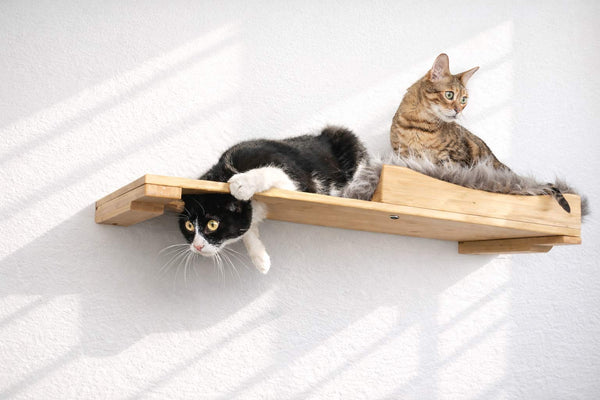
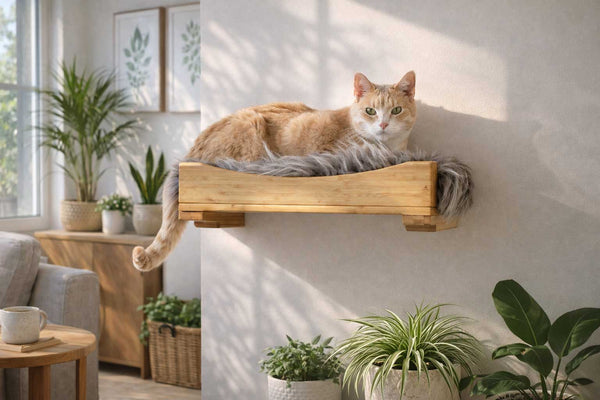
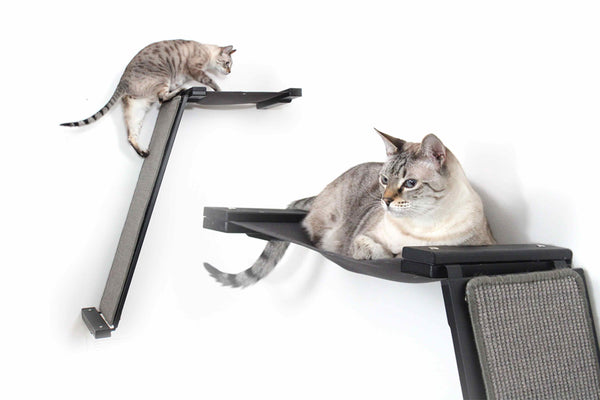
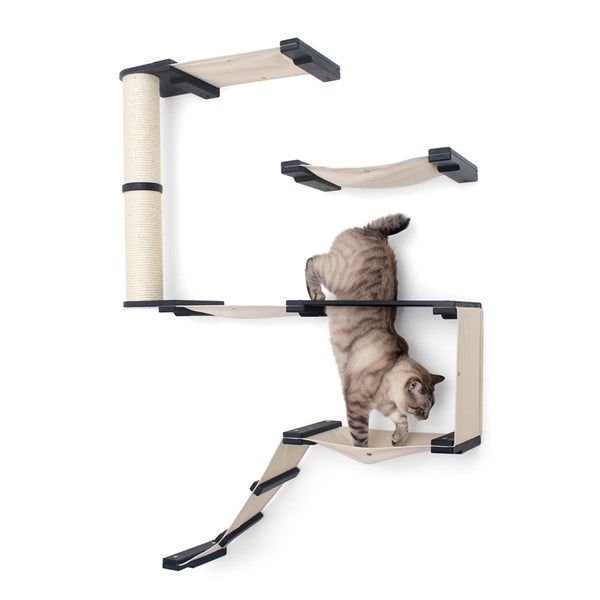
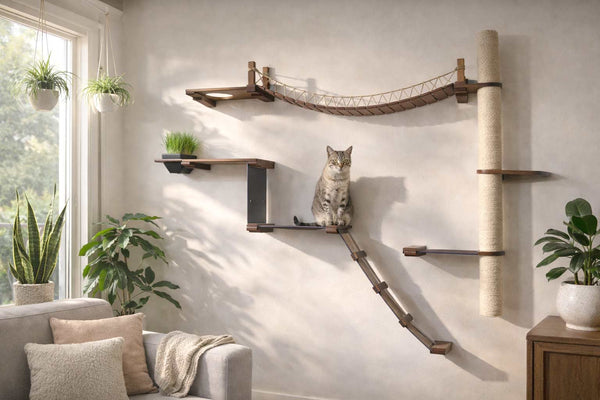
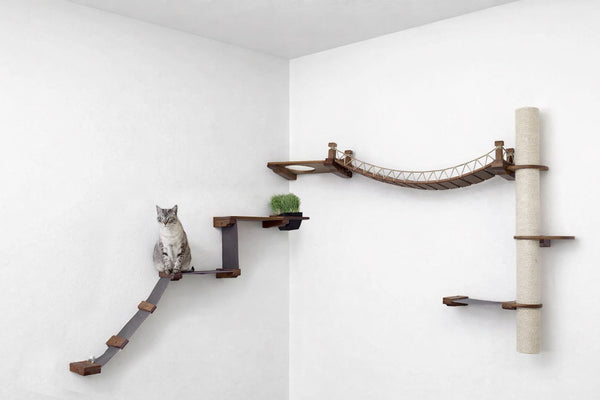
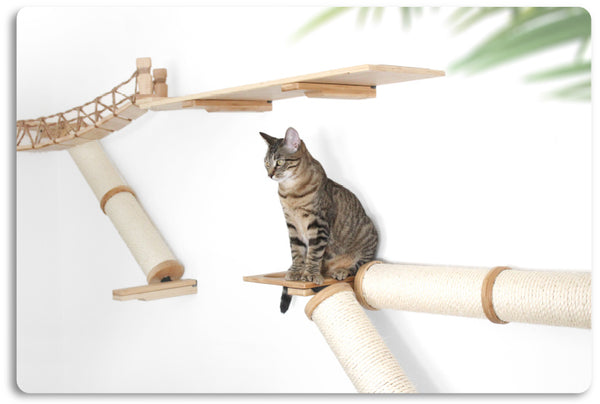
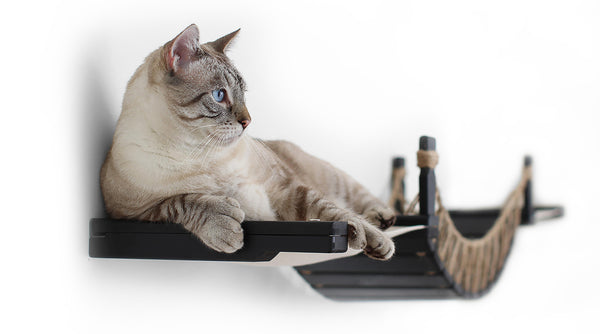
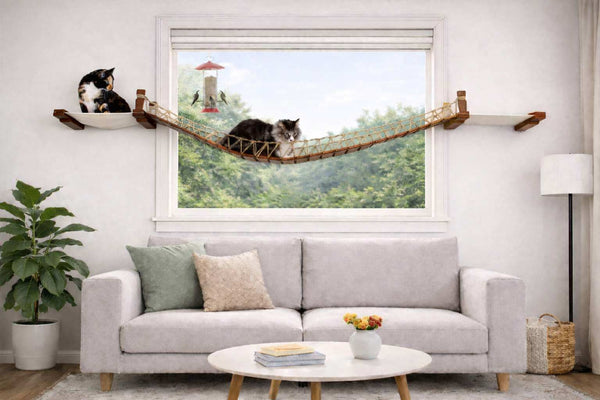
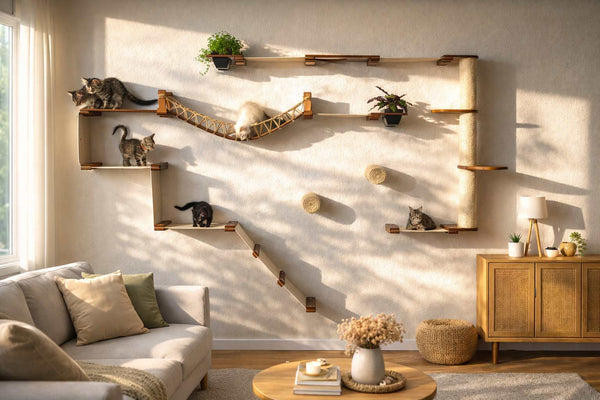
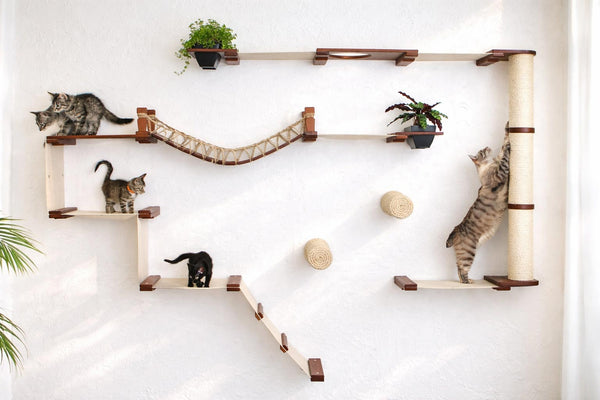
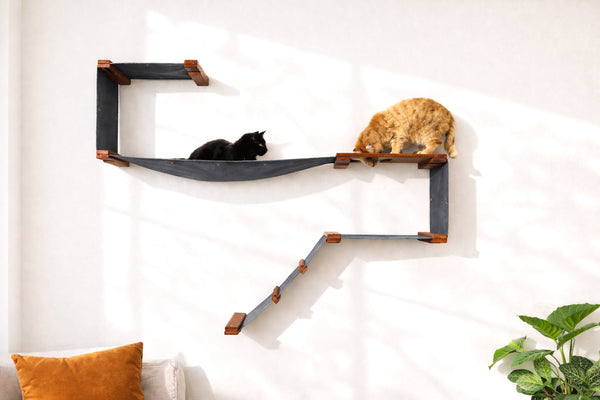
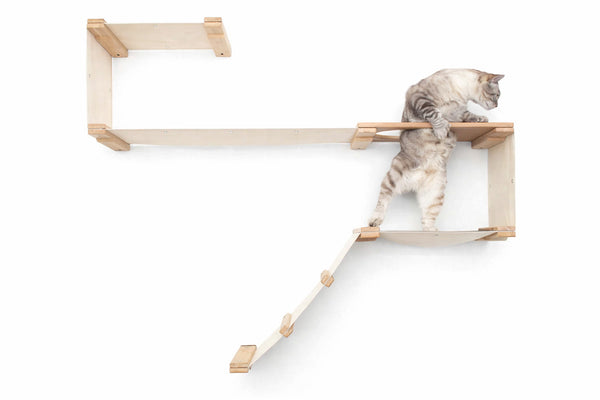
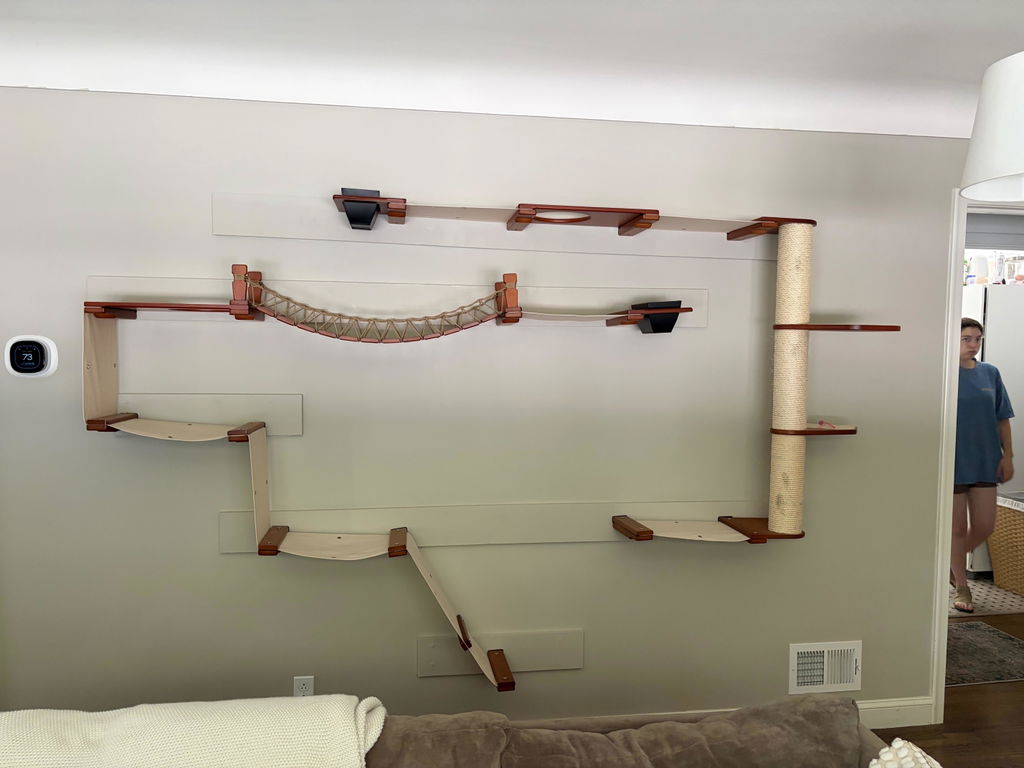
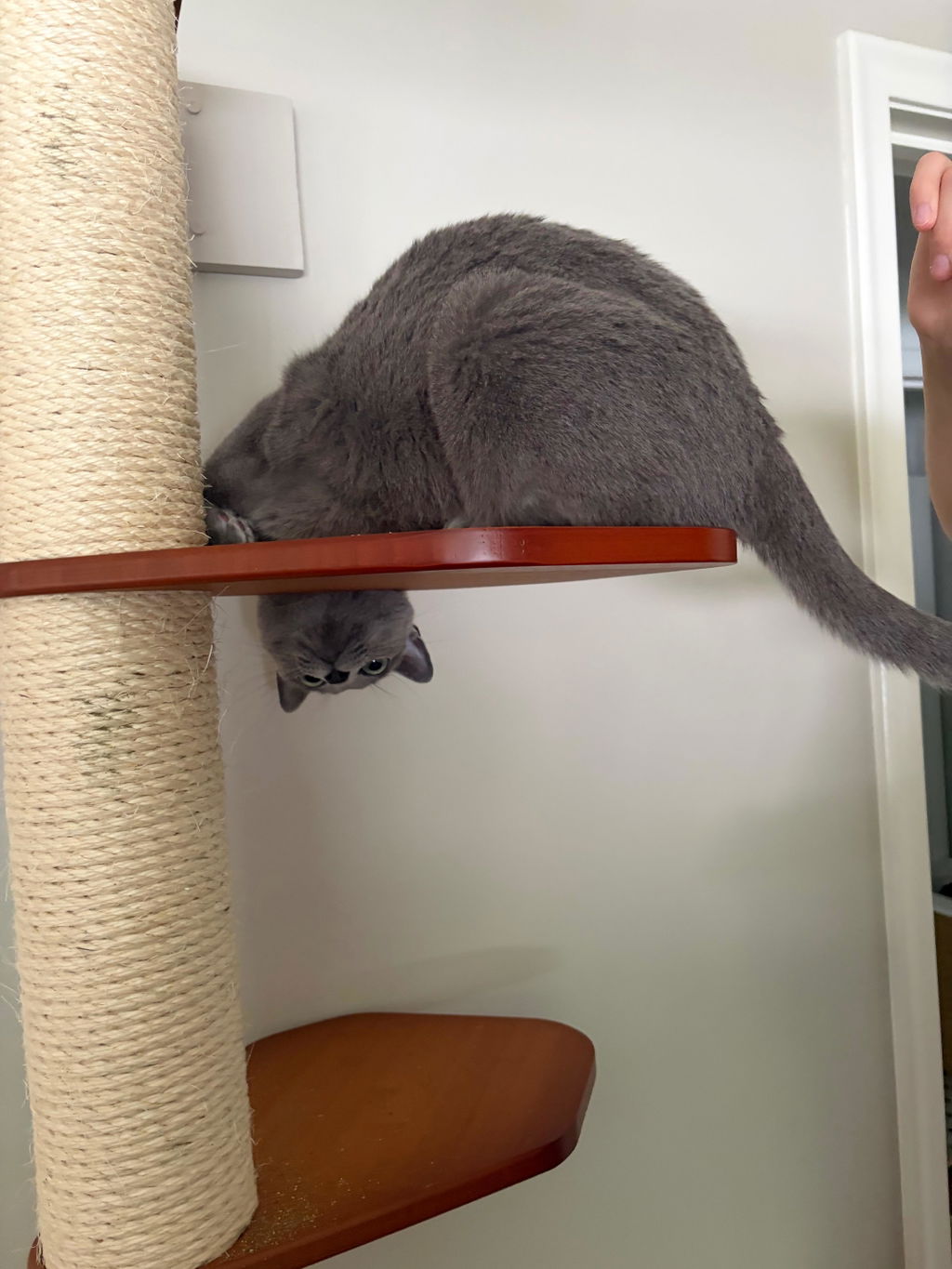
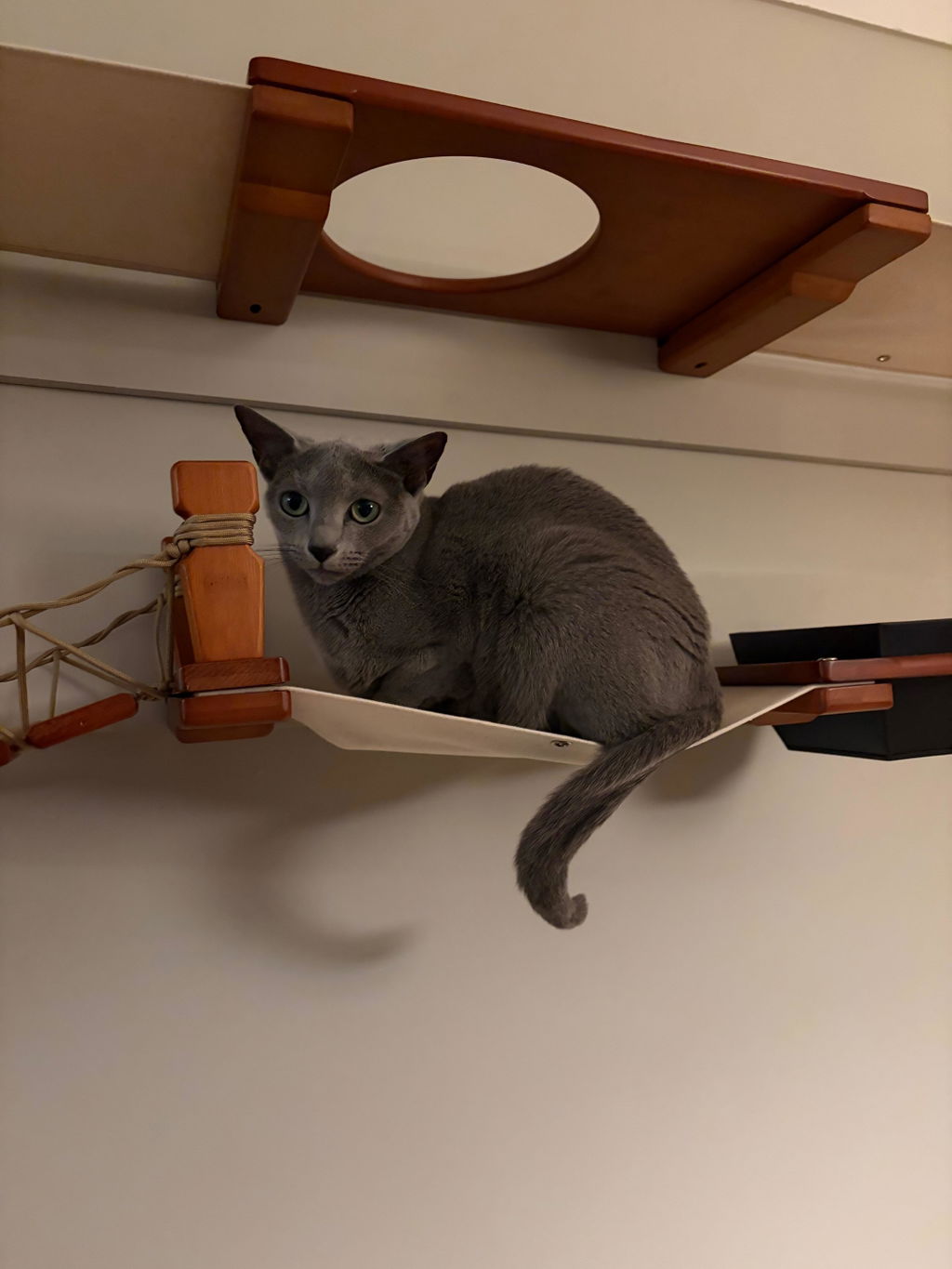
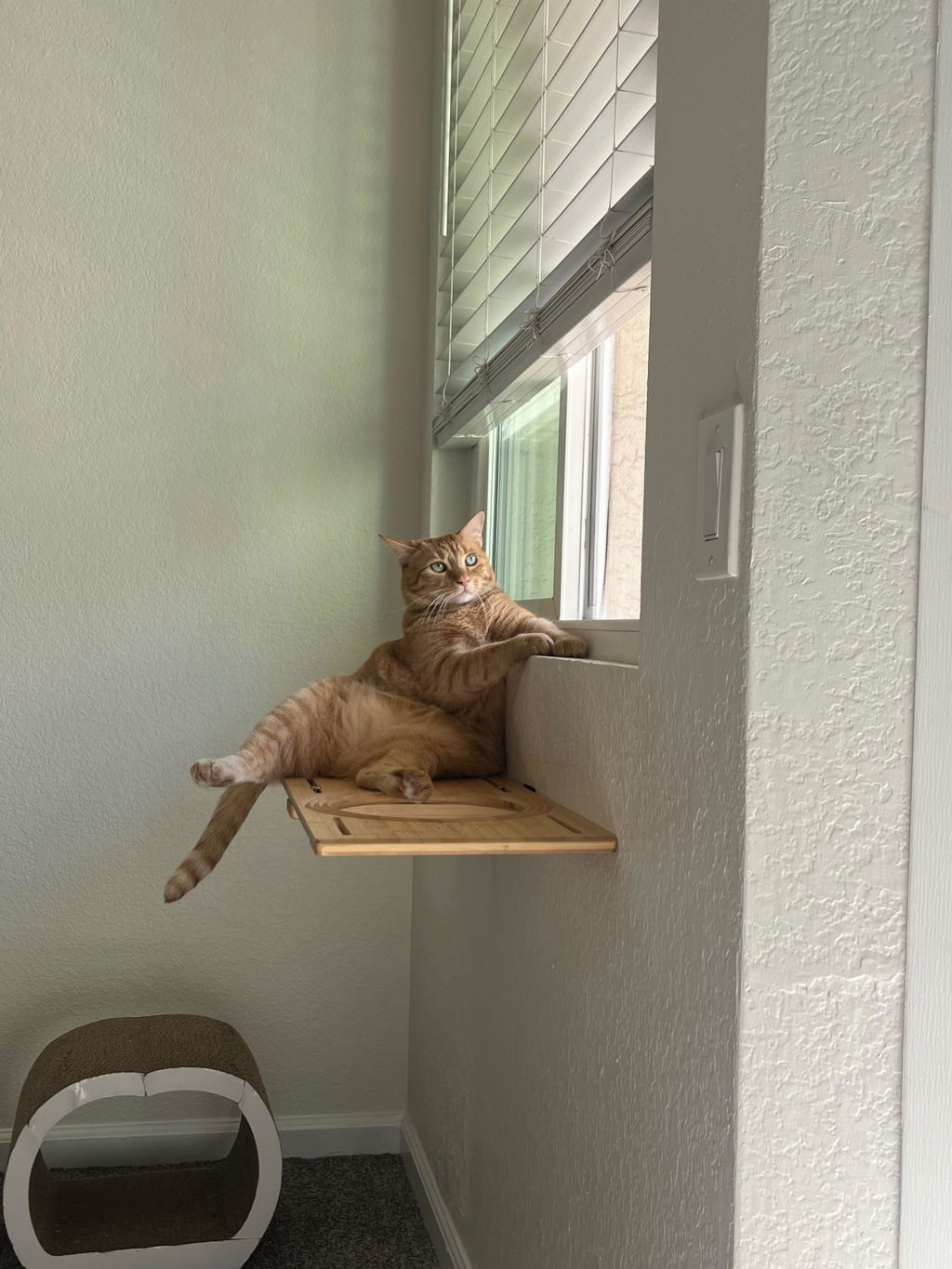
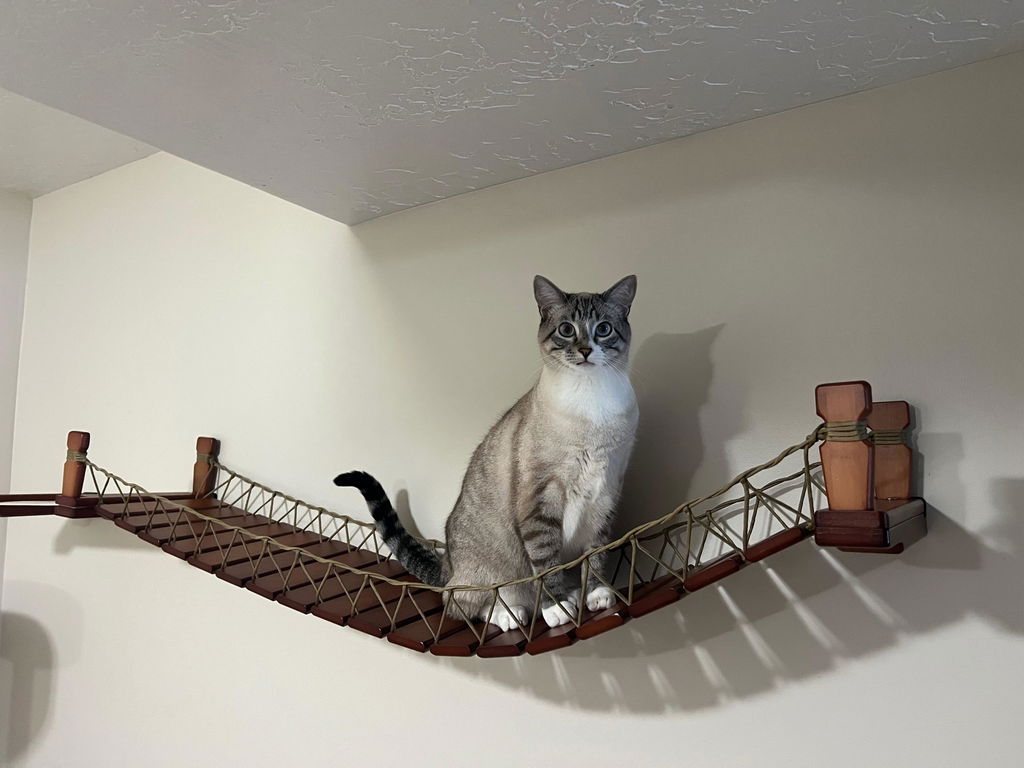
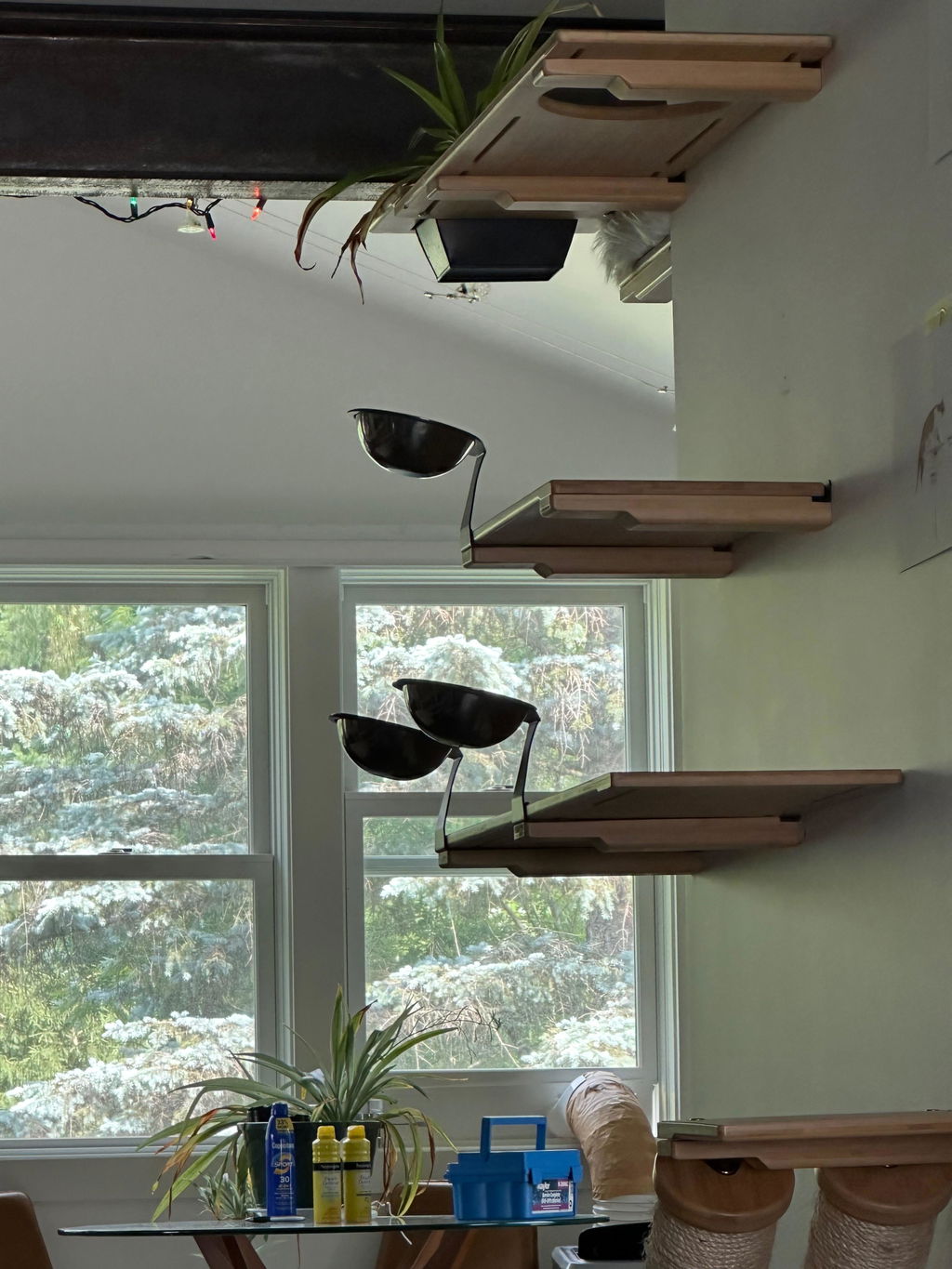
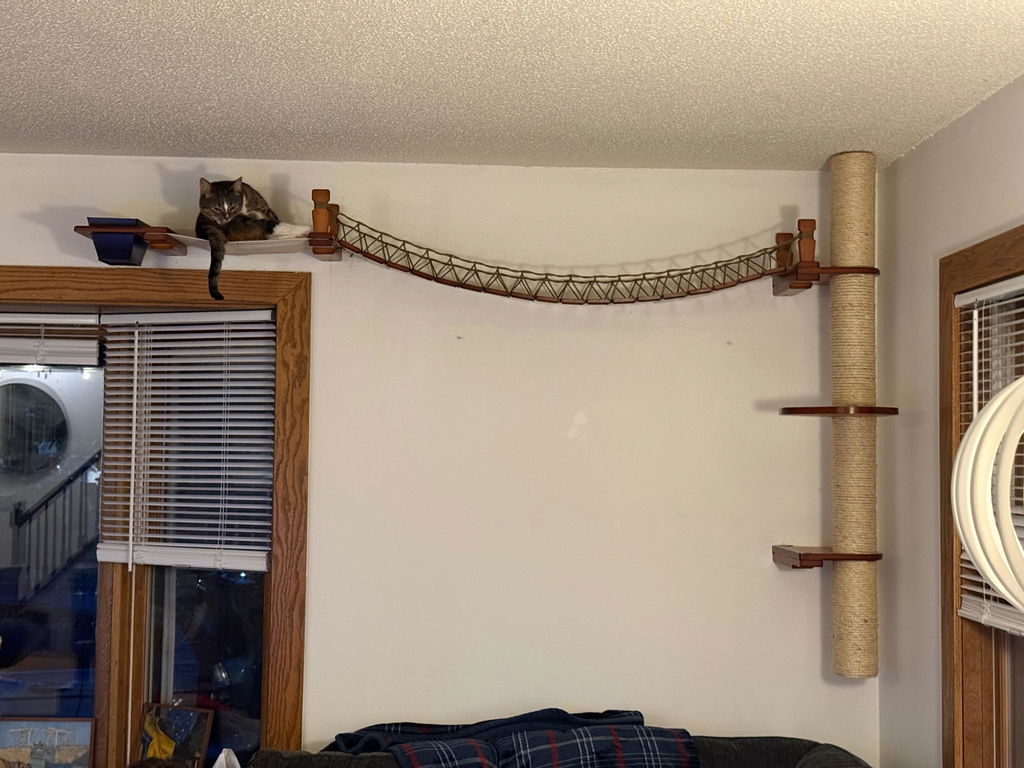
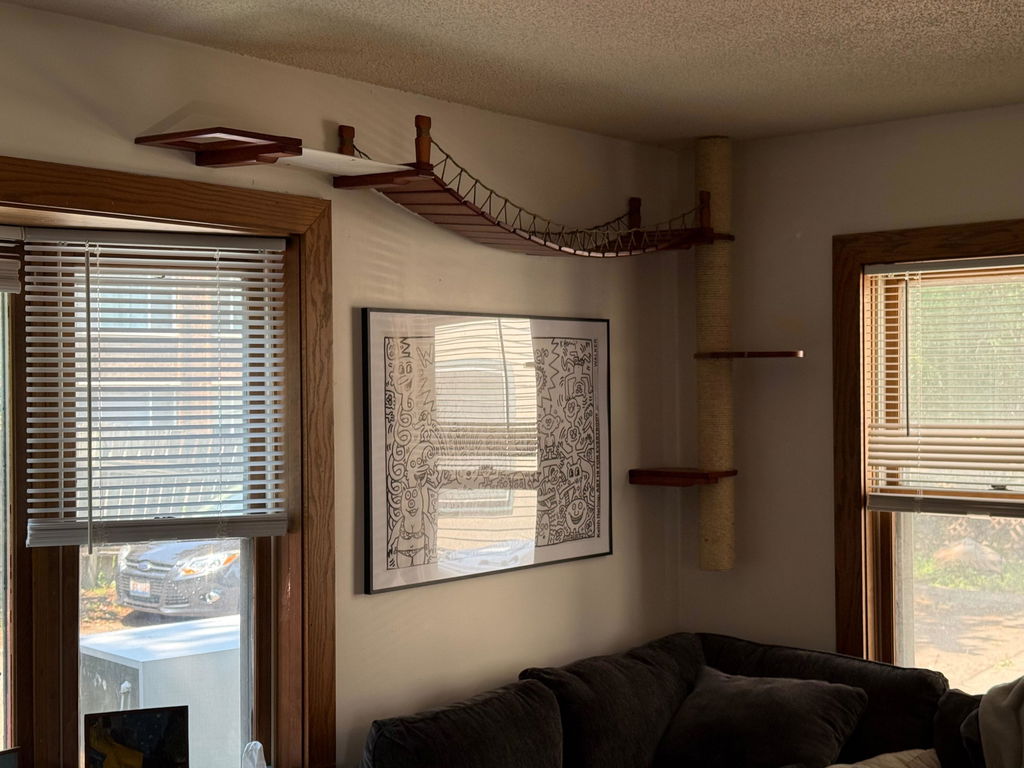
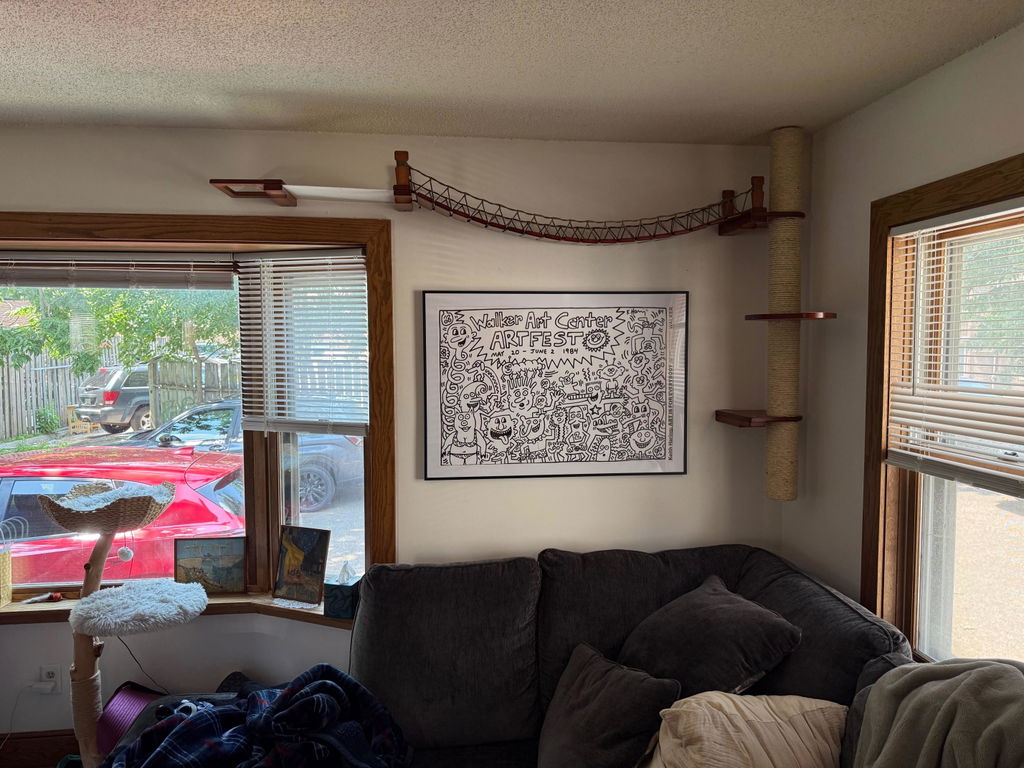
Cat wall shelves are mounted directly into your wall, creating vertical pathways for your cat to climb, lounge and explore.
- Mounted into studs for strong support
- Fully customizable layouts
- Great for creating vertical territory

Cat Trees
Freestanding Cat Trees
These are the classic options most people picture when thinking about cat trees vs cat towers. They tend to spread outward as much as they go upward.
- Wide base with multiple platforms
- No installation required
- Often include scratching posts and hideouts

Wall-Mounted Cat Trees
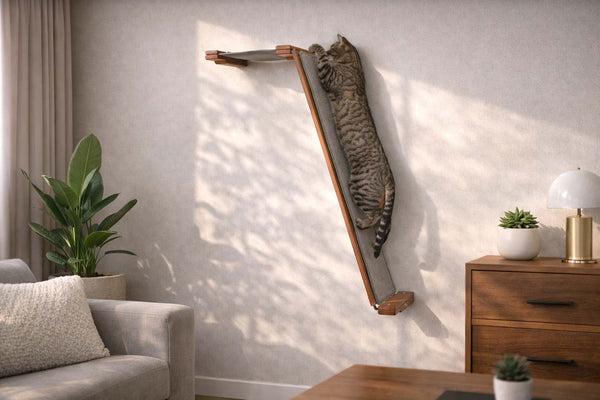
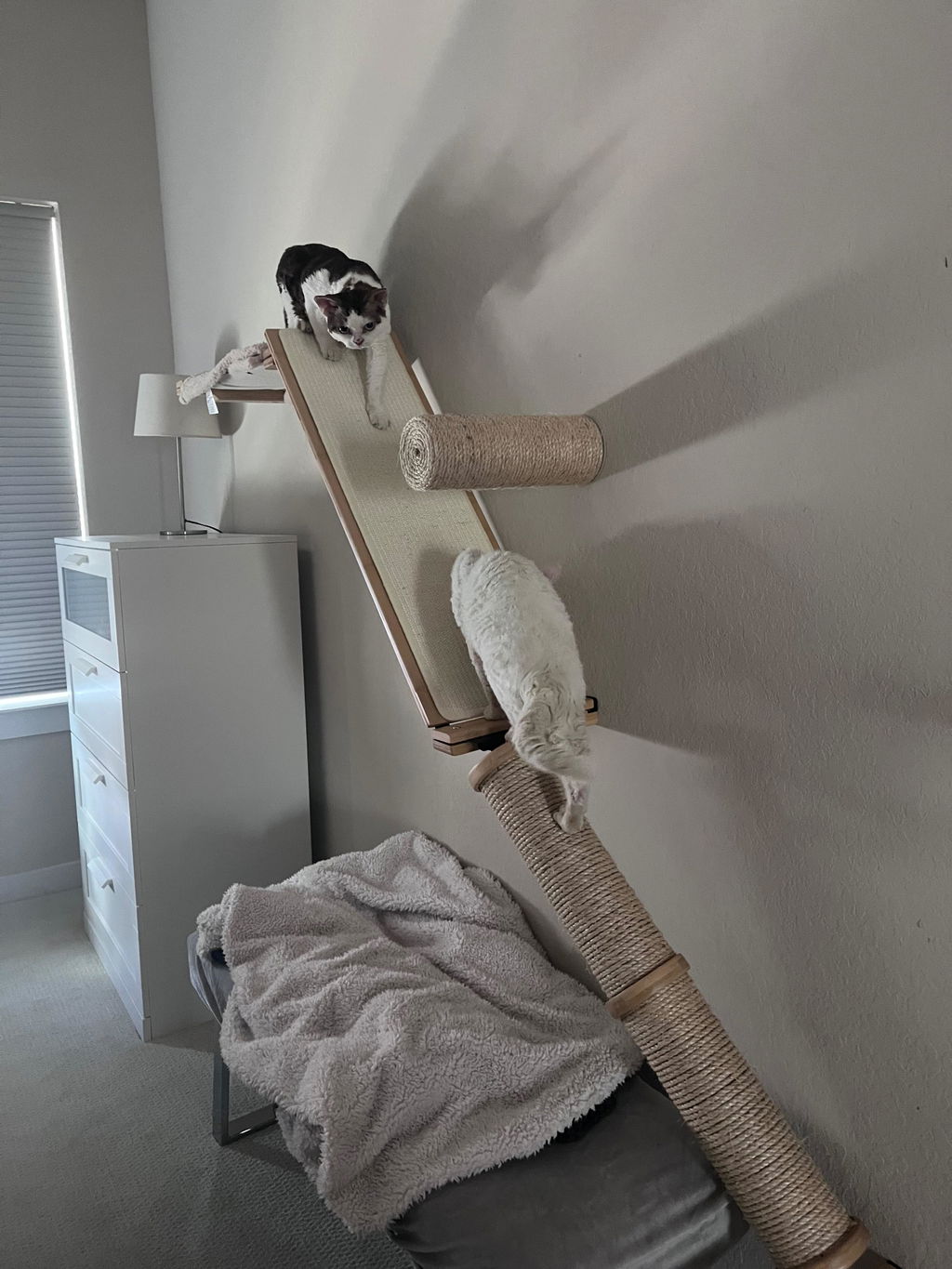
These are a hybrid between shelves and traditional trees, offering vertical climbing without taking up floor space.
- Mounted to the wall like shelves
- More compact than freestanding trees
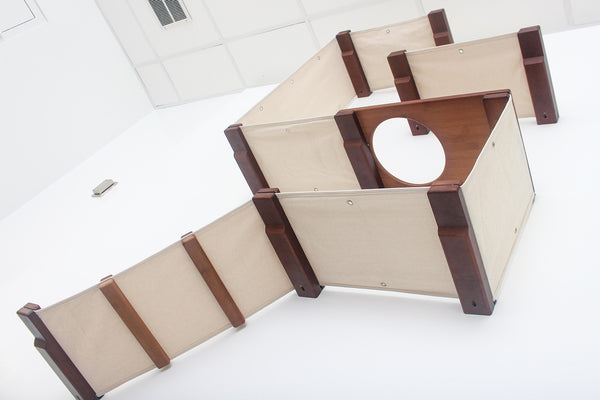
- Can still include condos and hammocks

Cat Towers
Cat towers are the more compact, vertical-focused version in the cat tree vs cat tower conversation. They’re designed to go up instead of out.
- Slim, space-saving footprint
- Primarily vertical design
- Simple and easy to move

The Real Difference Between Trees vs Towers
When comparing cat trees vs cat towers, here’s the simplest way to think about it:
- Cat trees = wider, more spread-out, multiple activity zones
- Cat towers = narrower, more vertical, space-saving alternative
Pros and Cons Compared
Cat Wall Shelves & Wall-Mounted Cat Trees
✔ Save floor space
✔ Highly customizable and expandable
✔ Encourage natural climbing instincts
✖ Require an understanding of wall stud locations and installation

Freestanding Cat Trees
✔ No installation required
✔ Easy, all-in-one solution
✔ Widely available
✖ Bulky and less flexible

Cat Towers
✔ Smaller footprint than trees
✔ Good for vertical height in tight spaces without installation stress
✖ Less interactive than wall systems
✖ Can be less stable for large/active cats

Which Cat Furniture Is Best?
Based on Your Space
Small Apartments or Limited Space
- Wall shelves or towers are your best bet. Shelves completely eliminate floor clutter, while towers still take up some space.
Larger Homes with Open Floor Plans
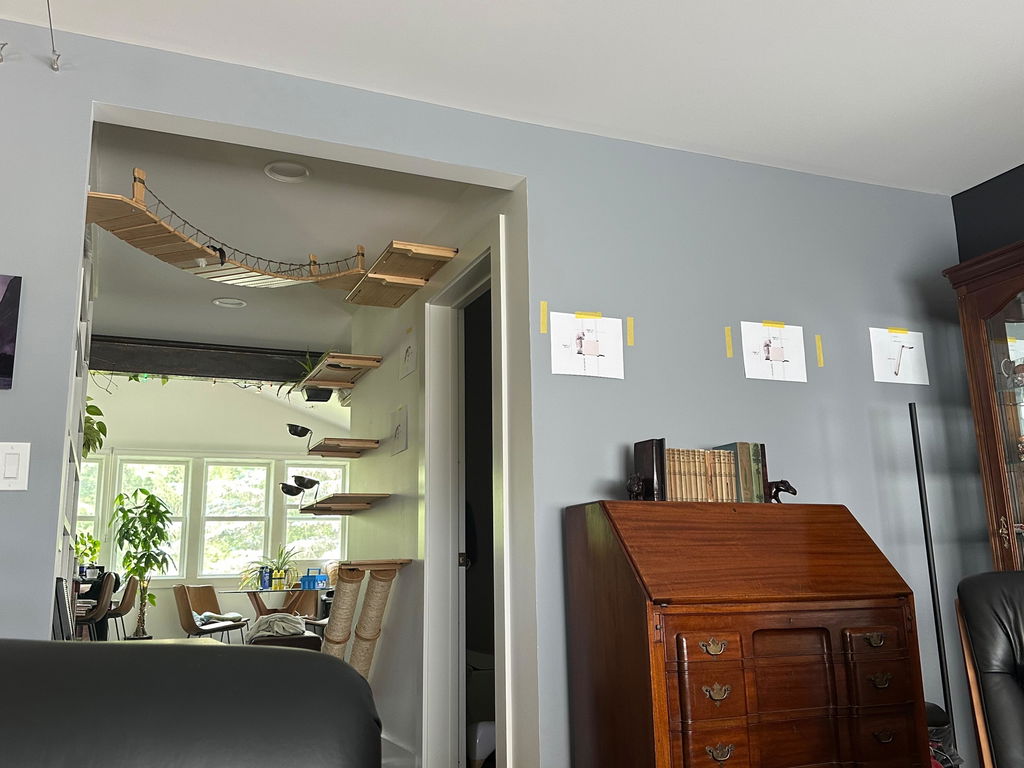
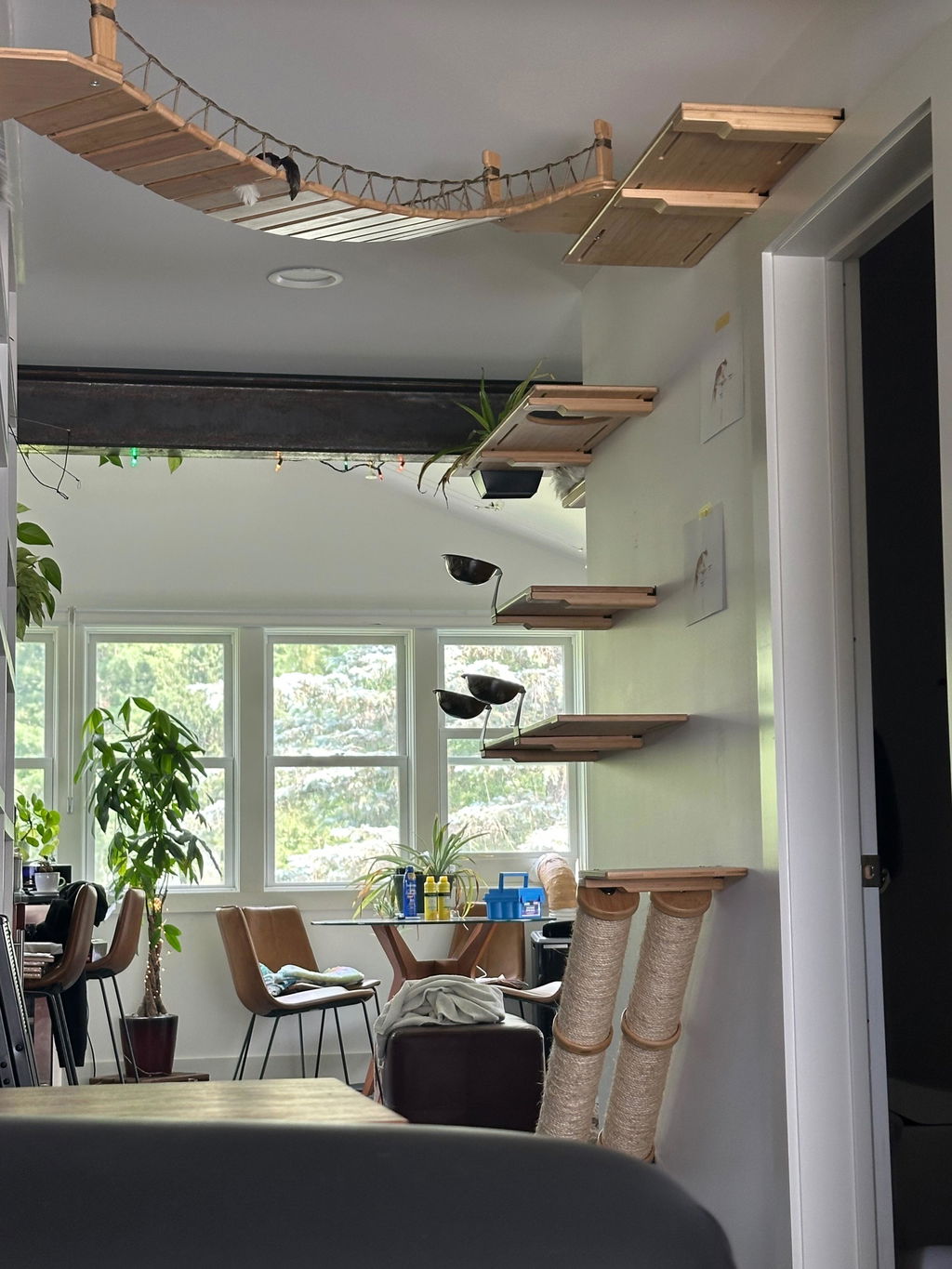
- You have more flexibility here. Cat trees can work well, or you can mix trees with wall shelves for a more dynamic setup.

Renters vs Homeowners
- If you’re renting, trees and towers are the easiest option. That said, many renters still install shelves successfully with proper planning.
- Interested in learning more about safe installs? Follow the link here to learn more!
Some people renting worry about installing into their walls due to damaging them and losing their security deposit. Follow these easy steps to be sure you get your full deposit back.
Based on Your Cat’s Behavior & Personality
For Cats That Scratch Furniture
- The short answer is: give them a better outlet.
- Looking for more tips to stop your cat from scratching your furniture? See our blog linked here for more tips!

For High-Energy or Bored Cats
- Cats that zoom around your house need vertical space and stimulation.
- Learn more about building your cat vertical space in our blog linked here.
- Wondering what the benefits of cat walls are? See our blog here for more details.
For Anxious or Shy Cats
- Look for options with enclosed spaces, like cubbies or hammocks placed higher up. Elevated hiding spots help cats feel safe and in control.
For Multi-Cat Households
- Vertical territory is key. Shelves allow multiple cats to share space without conflict.
- Introducing a new cat? Learn how to avoid extra stress in our blog linked here.
Design & Aesthetic Considerations
Your cat’s furniture doesn’t have to clash with your home.
- Wall shelves blend seamlessly into modern spaces
- Minimalist setups use fewer, cleaner lines
- Traditional trees tend to be more noticeable
- Neutral materials like wood and canvas elevate the look
Installation vs Convenience: What to Expect
To many renters, or people who are less handy with tools, the thought of installing anything into their walls can feel like a lot to take on. Traditional cat trees are often easier to assemble, and you don’t need a power drill, but the trade off is giving up floor space in your home and also limiting cats to the heights and options available on a floor standing cat tree. We feel the pros outweigh the cons when it comes to installation versus convenience.

Installing Cat Wall Shelves
Installing wall-mounted furniture is more straightforward than most people expect, especially when mounting into studs. It’s a one-time setup that pays off long-term.
Plug-and-Play Options (Trees & Towers)
If you’re not handy or just want something quick, trees and towers are great. They’re ideal for:
- Temporary setups
- Budget-friendly options
- People who want zero installation
Cost Comparison: Short-Term vs Long-Term Value
- Upfront cost vs durability: Trees and towers are often cheaper initially, but may wear out faster.
- Expandability: Wall systems win long-term since you can keep adding to them instead of replacing them

When to Combine Cat Shelves, Trees, and Towers
Sometimes the best setup isn’t choosing one, it’s combining them.
- Hybrid environments give your cat more variety
- Trees can act as a starting point to reach wall shelves
- Towers work well as transitional pieces
- Multiple zones help reduce tension in multi-cat homes
Final FAQs About Cat Shelves, Trees, and Towers
Are cat wall shelves safe?
Yes, when properly installed into studs, they’re extremely secure and often more stable than freestanding furniture.
Are cat towers stable?
They can be, but stability depends on the base and build quality. Larger or more active cats may outgrow them quickly.
Do cats prefer height or hiding?
Most cats want both. Elevated perches and enclosed spaces give them a sense of safety and control.
Can you install shelves in apartments?
Yes, many people do. We have heard concerns about getting the security deposit back, but from my experience living in many rented spaces, I have never had money held back due to wall damage, and I tend to go all out with cat wall furniture. Apartments allow people to hang pictures, and our furniture is installed with #8 wood screws, which is the same size as a typical screw used for hanging. As long as you take the appropriate steps to repair the wall prior to moving out, you will be fine.
If you are only staying in the location for a year or only have a few months left in the lease, it may make more sense to get free standing cat furniture or wait to move, just due to the time and effort of installing cat wall furniture.
How much vertical space does a cat need?
There’s no exact number, but more is almost always better. Vertical space mimics their natural environment and keeps them mentally and physically engaged.
At the end of the day, the answer to what cat furniture is best for cats really depends on your space, your cat, and how much flexibility you want.
If you want something quick and easy, towers or trees can work. But if you’re looking for a long-term solution that saves space, looks good, and keeps your cat engaged, wall-mounted setups are hard to beat.
The best setup is the one your cat actually uses, and the one that fits naturally into your home.