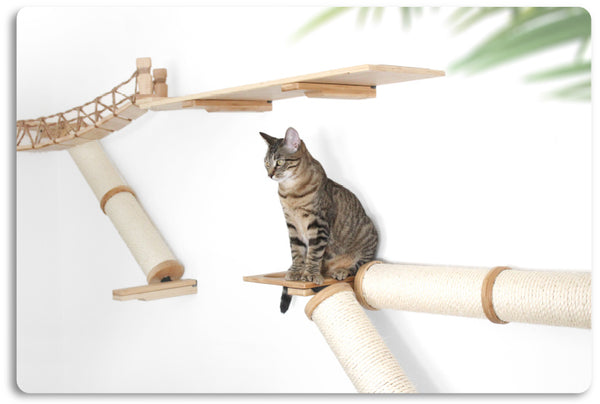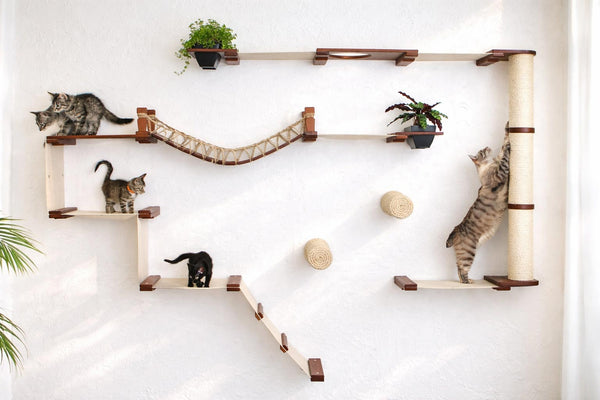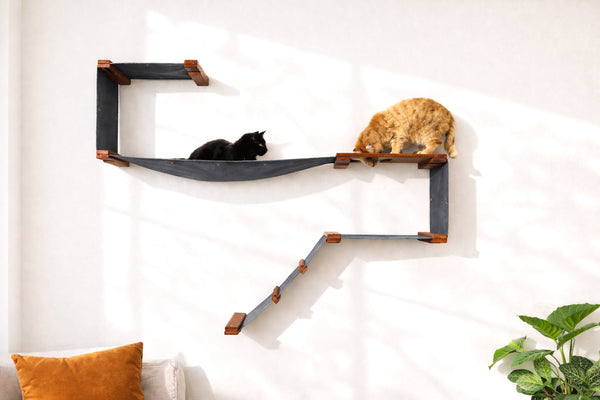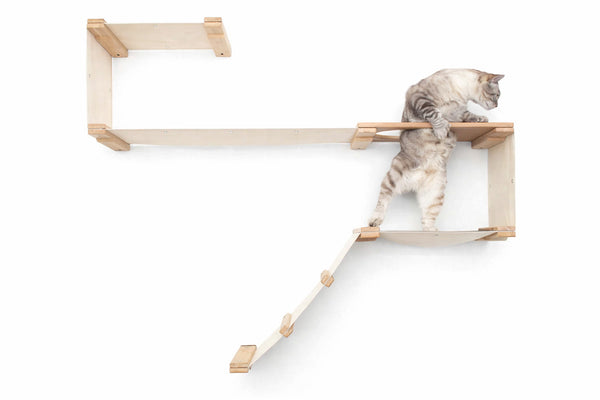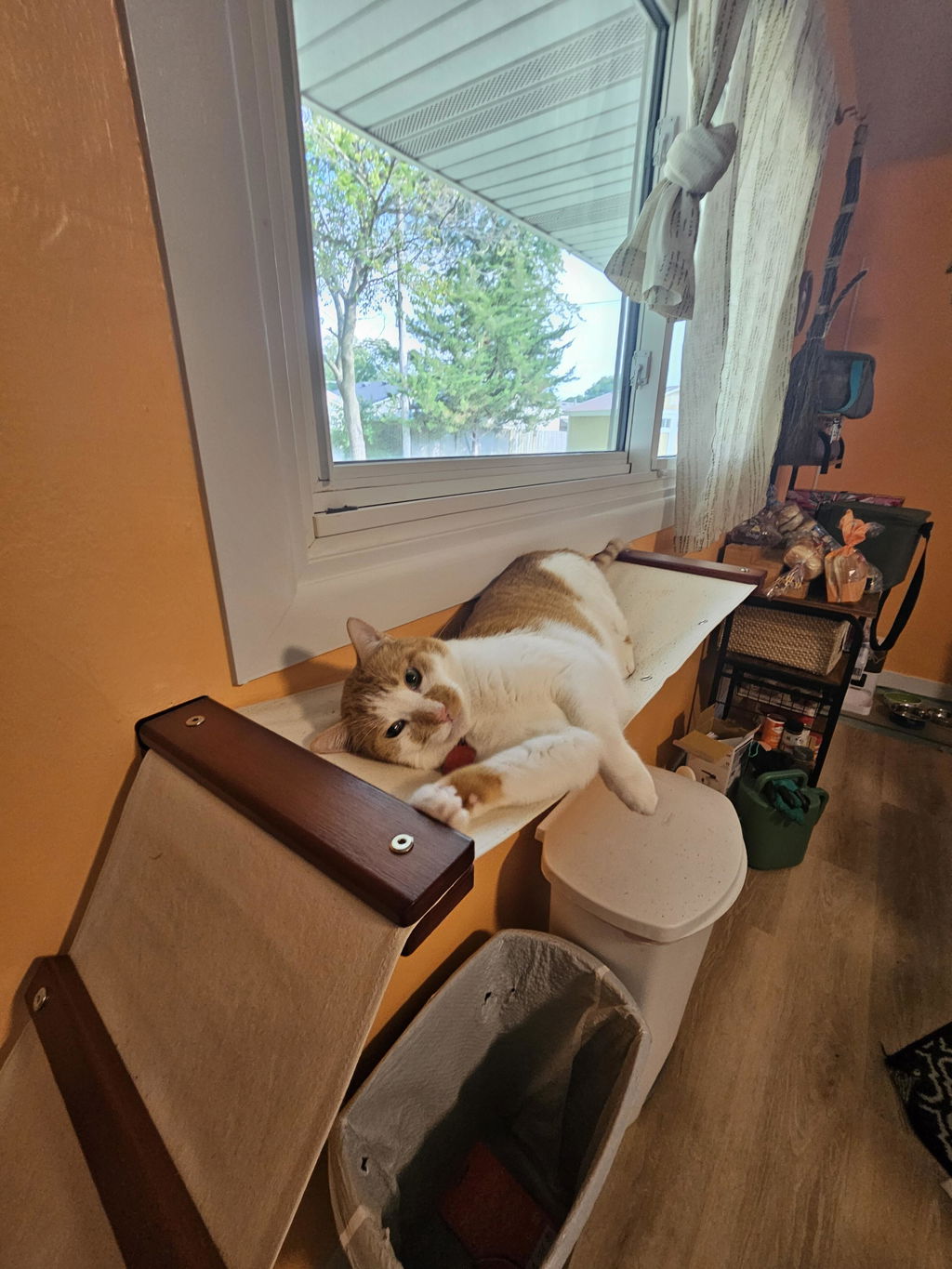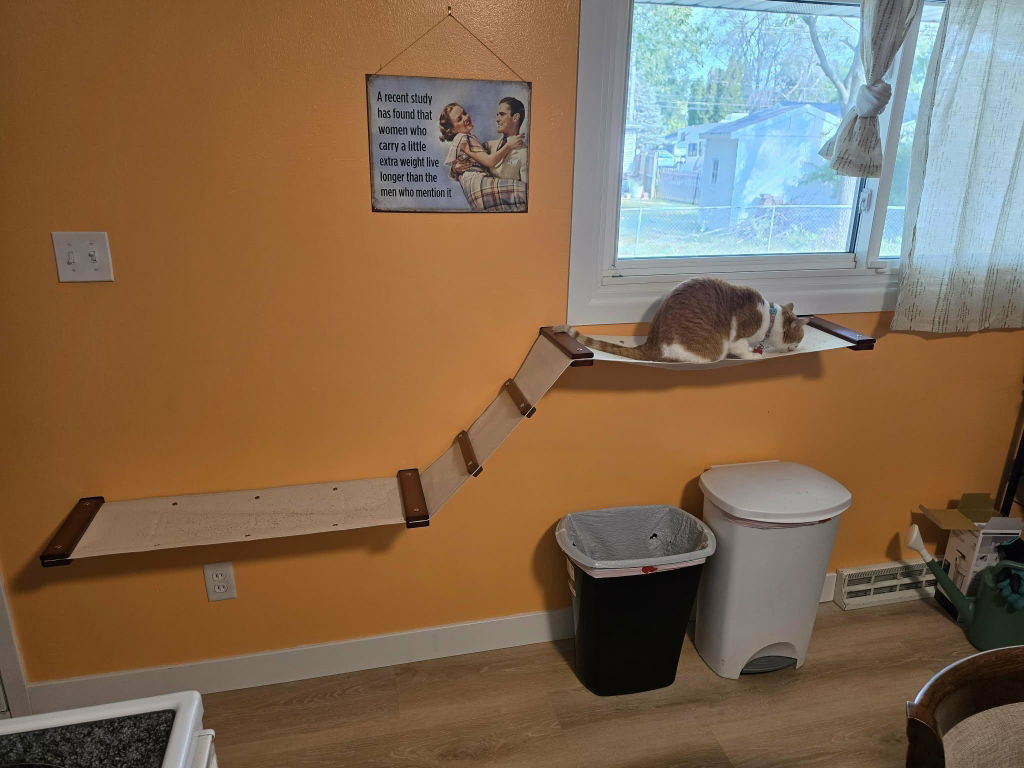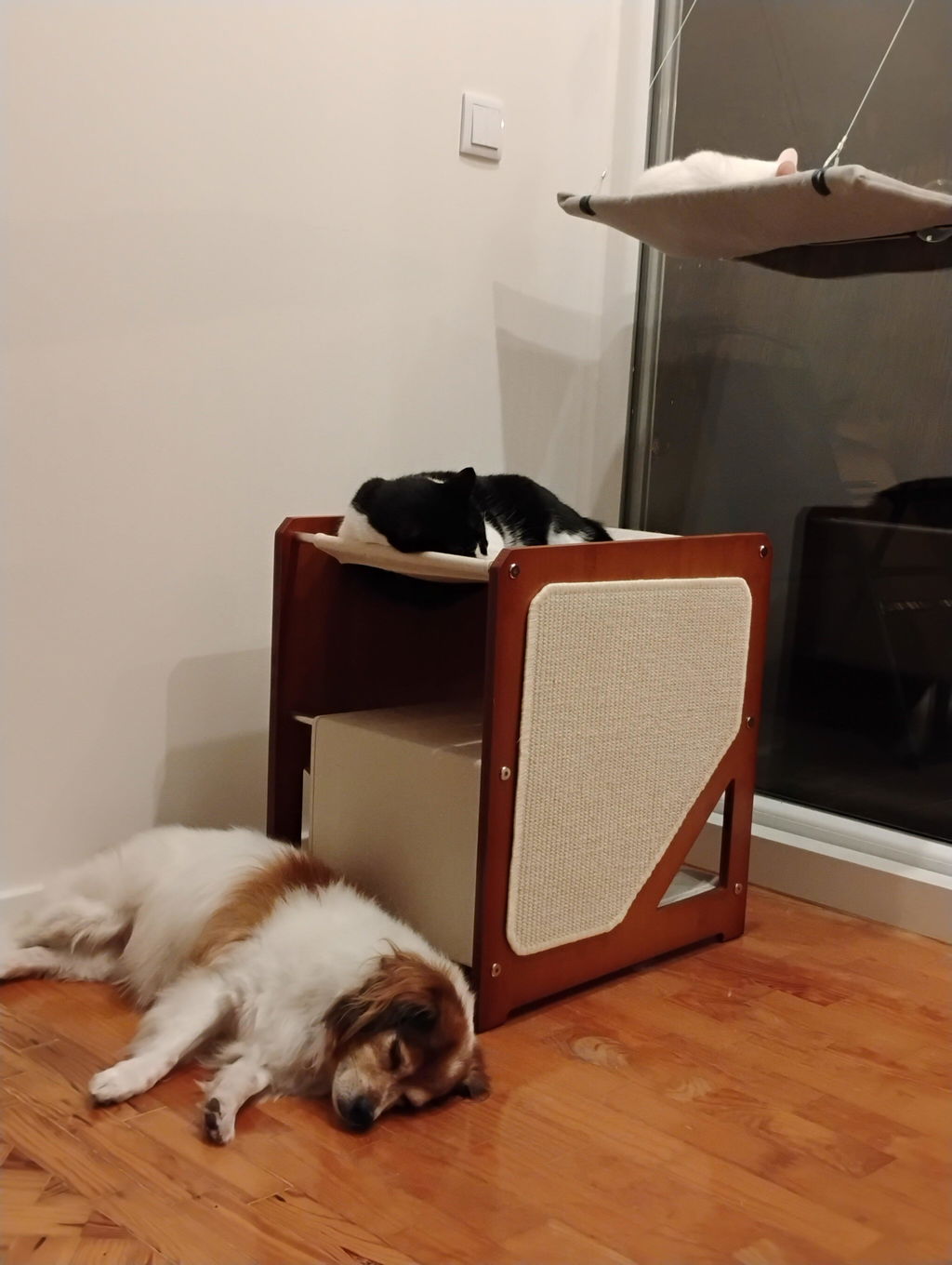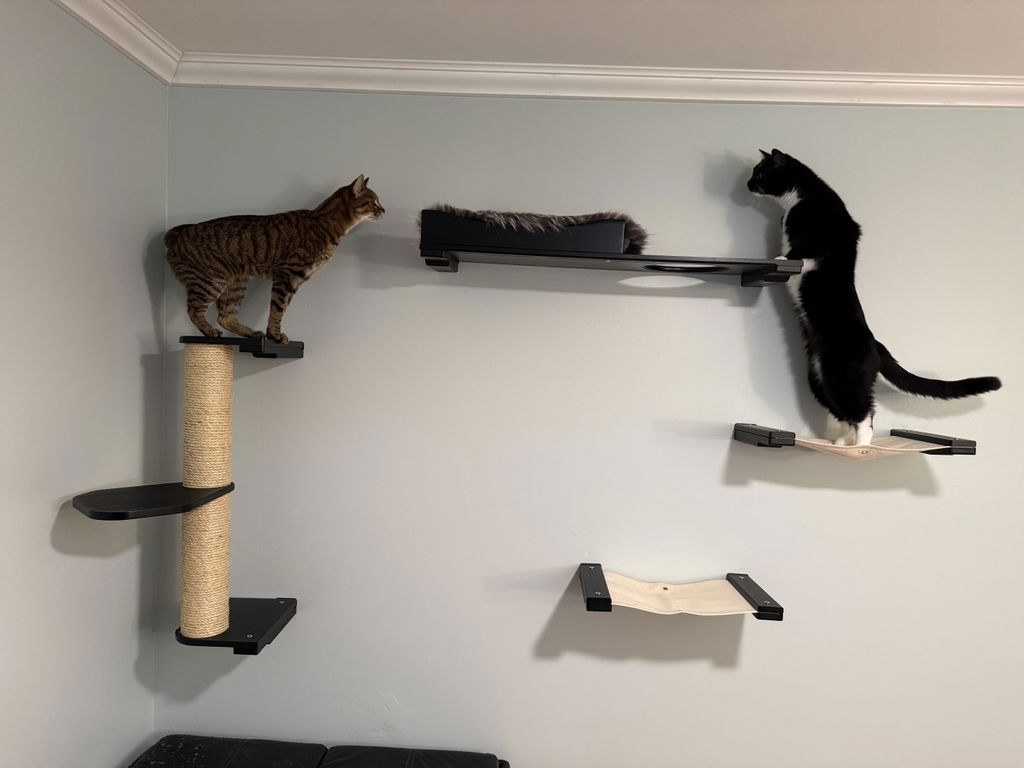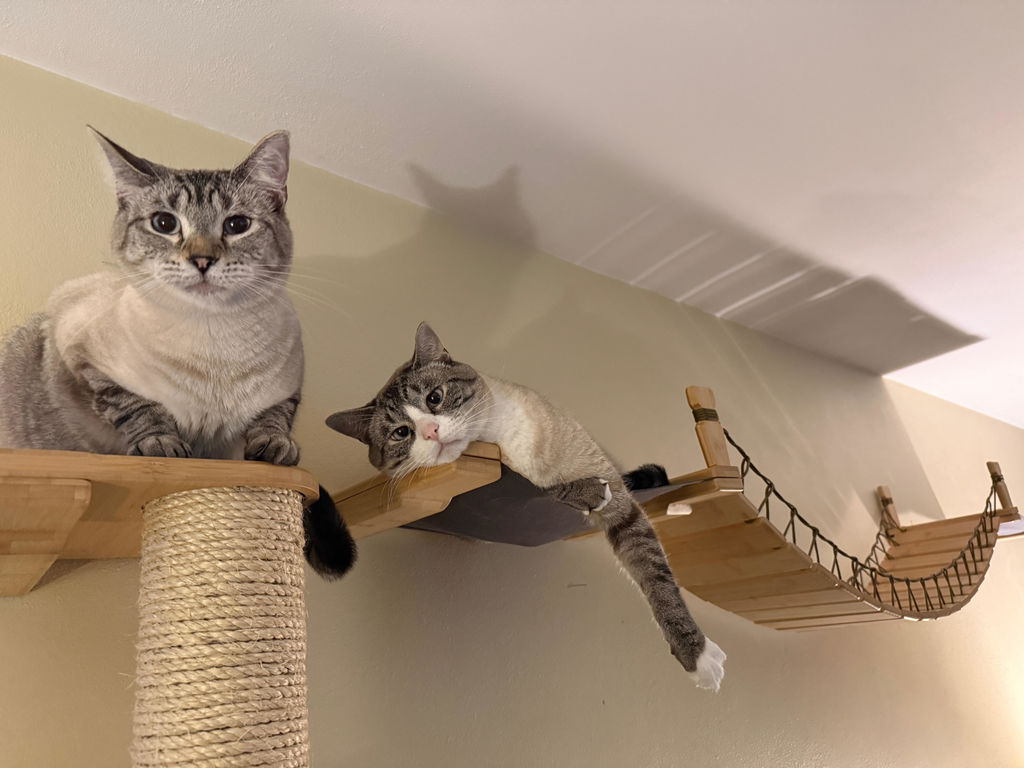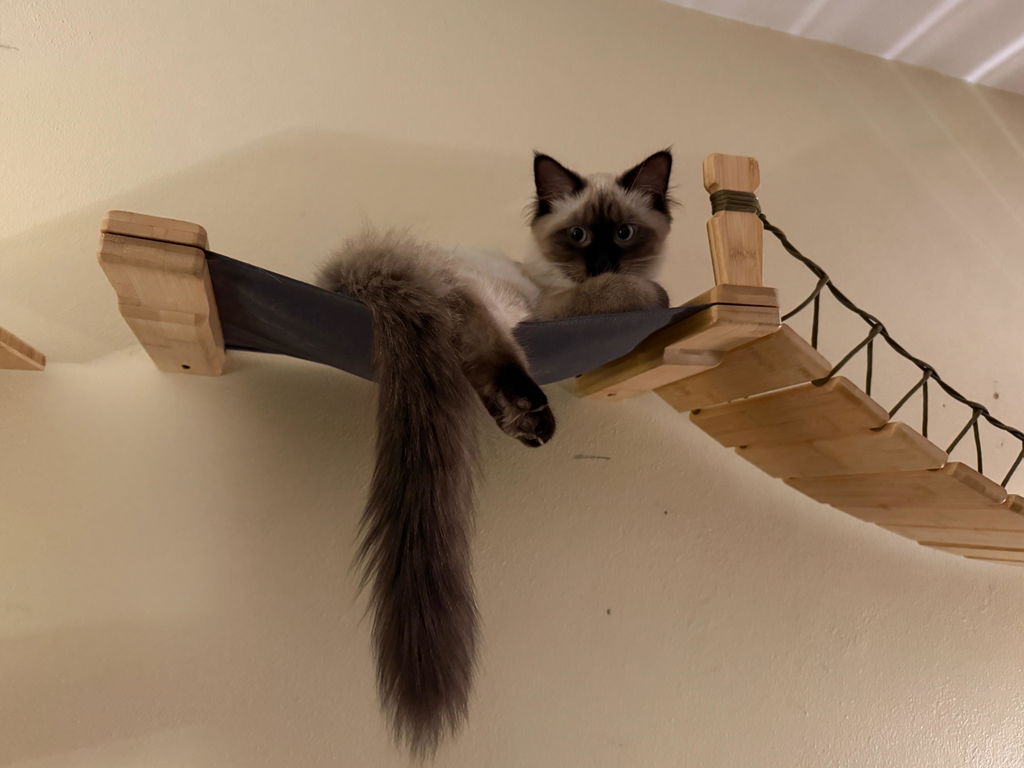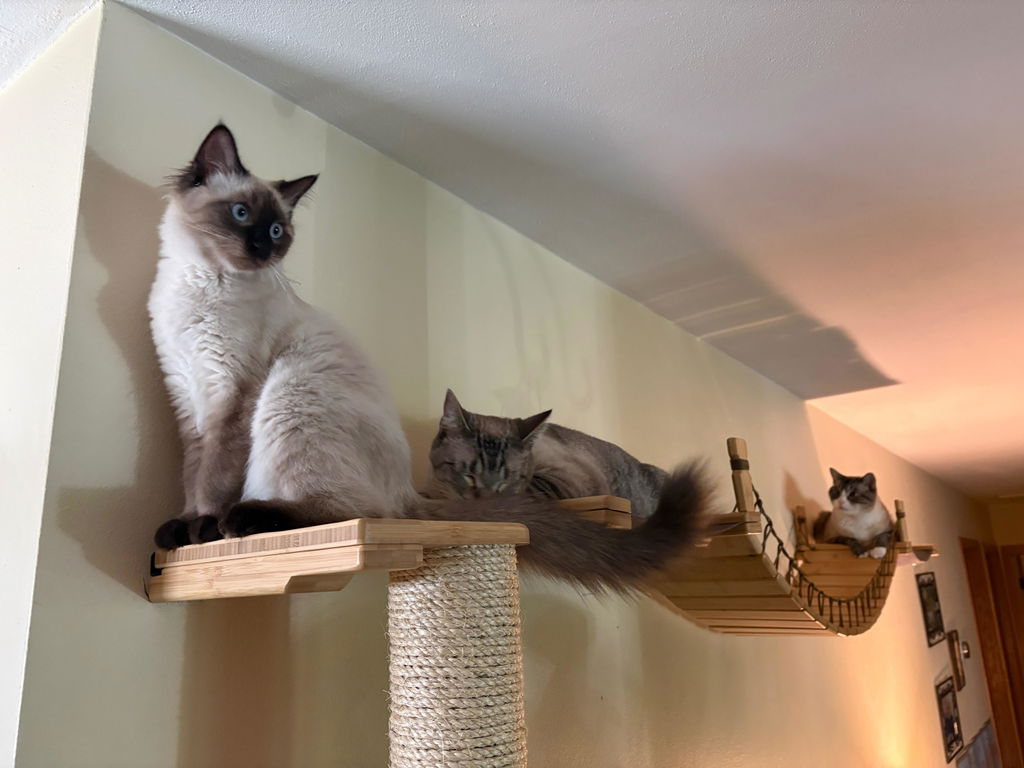

Cat-designed furniture is not just a luxury for house cats. It provides essential benefits that promote natural cat behavior and a proper outlet for feline instincts. One important cat habitat-promoting piece of furniture is the cat tree, specifically a floor-to-ceiling cat tree. These types of cat trees extend up the wall creating a special type of vertical space where cats can climb, lounge and observe their environment way out of reach from everyone in the home. This replicates a real tree way more then the typical free standing cat tree, because cats don't climb 4-foot trees.
Why Have a Ceiling-to-Floor Cat Tree?
Should you build your cats a vertical playground up the wall? This depends a lot on your cats, their abilities and personalities, and your space constraints. In most instances, they make a lot of sense because they allow you to take advantage of unused wall space while saving floor space and providing your cats with a playground to keep them active.
We've seen a wide variety of cats with ranging ages and abilities benefit from wall furniture. Although kittens and active cats seem to have the most fun on the furniture, senior cats just need a more stable way up, like shelves instead of hammocks or poles, and you may want to limit the heights that you're building the vertical space.

Promotes Natural Behavior
Cats instinctively prefer and seek elevated positions that feel safe. The floor-to-ceiling cat tree provides a natural outlet by replicating the natural environment our arboreal cats are designed for. A study published in Veterinary Key says these elevated perches are central to a cat's well-being, allowing opportunities for complex and active behaviors. By adding a cat tree, you increase the cat's territory and habitat in your home.

Facilitates Physical Health
Maintaining physical activities and exercise routines as a regular part of your cat's life is essential for good feline health. When you add a floor-to-ceiling cat tree to their environment, you promote physical health by providing places to jump, stretch, and climb. These activities engage muscles around the spine, strengthen the back, support flexibility, and prevent muscle weakening. The increased activity and muscle strength also help support a healthy weight, something very important in joint health and injury prevention in cats.
Creating Mental Stimulation
Research shows mental enrichment is critical to cat welfare. Many cat behavior issues develop in the void of boredom. Along with other enrichment activities like play and food puzzles, environmental habitats like cat-designed furniture provide great mental stimulation. Sisal cat trees from floor to ceiling provide new textures, heights, and challenging physical puzzles in a safe and achievable way.
Reducing Stress and Anxiety
As naturally arboreal creatures, cats feel safe at higher habitats and perches. These places allow cats to fully let their guard down and de-stress. In a busy home, including multi-pet households, these locations are critical to maintaining peace, providing cats with control and choice to engage.
Heading Off Behavior Problems
Cats are very sensitive creatures. Stress, along with inactivity and boredom, can actually feed into problem behaviors like over-grooming, scratching, aggression, conflicts, and chewing. By offering these interactive, three-dimensional habitats, you help maintain your cat's mental and physical health, ultimately helping prevent these poor welfare indicators.
Building Out a Floor-To-Ceiling Cat Tree
 We've compiled some extra parts you can buy off Amazon if you're interested in transforming our scratching poles in floor to ceiling style cat trees.
If you're considering building a single pole running up, please note it's important to first take measurements of the height and reach out to us to check and see if that will fits with our pole section lengths.
- 4x Cat Scratching Pole Sections
- 2x Threaded Rods
- 3x Pole Couplings, or Leaf Shelves
- 2x Pole Caps
- 2x Baby Gate Extender Extension-4 Pack M8(8MM)

Building a Wall-Mounted Floor to Ceiling Cat Tree
If you're interested in mounting something similar to your wall, we've also compiled a variety of helpful resources with detailed instructions to help you plan your perfect cat wall. Here are a few links that dive deeper into the process:
Need help? We offer complimentary design assistance. Just send us a few details about your space and your cat, and we'll provide a custom layout we think would work best. Fill out the form here.
-
Assess Your Wall
Start by measuring your wall space to get a clear idea of where everything will be installed. Accurate dimensions will help you choose the right pieces and plan a layout that fits your home.

-
Locate and Mark Wall Studs
To ensure the furniture is secure and can hold up over time, even for the biggest house cats, it's essential to install into wall studs. We recommend marking stud locations using painter's tape as a visual guide while planning your layout. If you need help learning how to find your studs please see our Installation Guide.

See our video here about how to locate studs:

-
Choose the Right Furniture
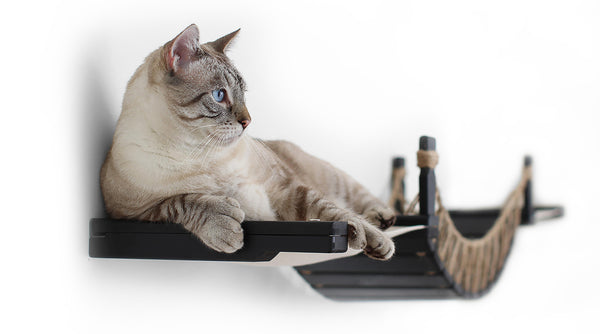
You know your cat best. Think about their personality and preferences when selecting furniture. Be sure to include pieces that allow for climbing, scratching, and especially lounging. Cats love to nap up high, so we always recommend including a hammock or wall-mounted bed.
-
Start From the Floor and Build Up
Begin installation at the bottom and work your way up. This approach gives you more flexibility as you go and allows your cat to help "test" spacing as you build.

Modern Floor-to-Ceiling Cat Tree Ideas for Your Wall
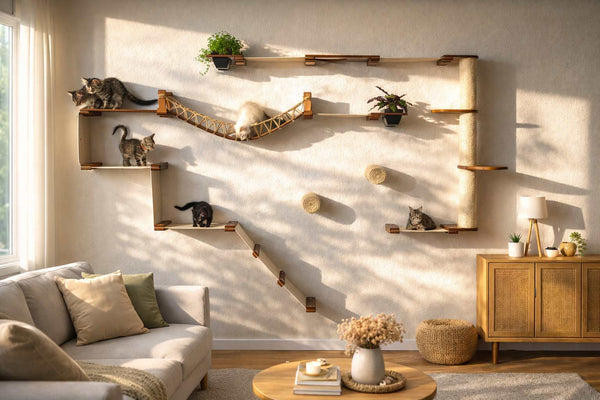
Here are a collection of some of our favorites. It can seem difficult to decide what to put where and how to work around existing furniture, but we suggest looking for blank spaces near the floor and focusing on how a cat would get up. From there, create a reason to go up, like a place to lounge, eat or perch. Behaviorists often suggest creating multiple routes up and down if there is more than one cat in the home.
The Living Room Labyrinth
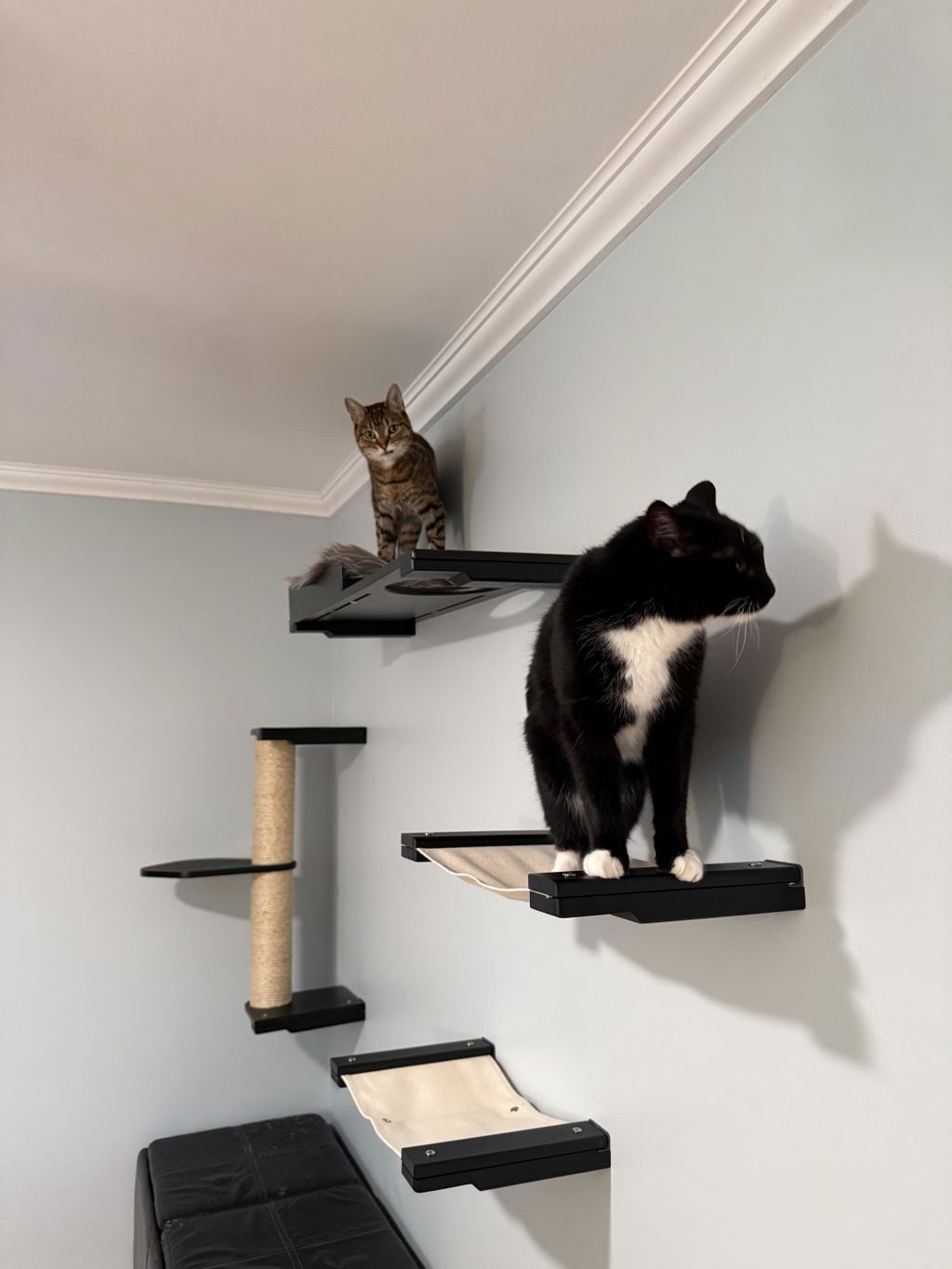
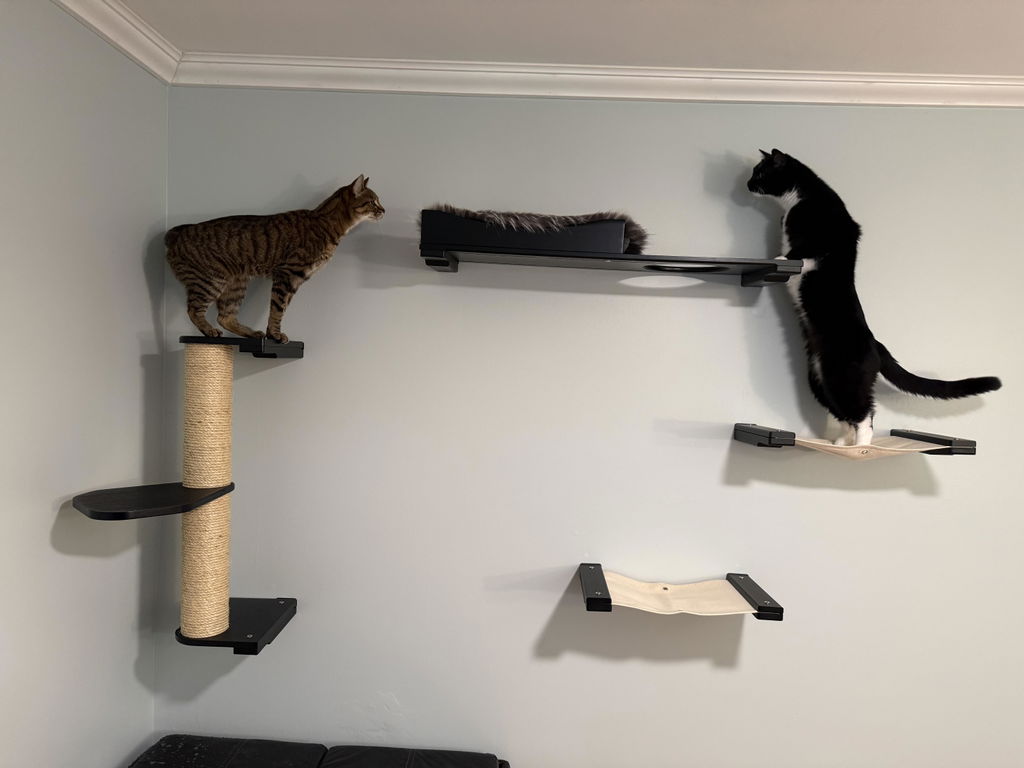
What I love about this layout is that it works around the corner and includes multiple bridges, hammocks and scratching poles. It elevates the room while creating a special area for the cats.

Scratching Pole Ramps
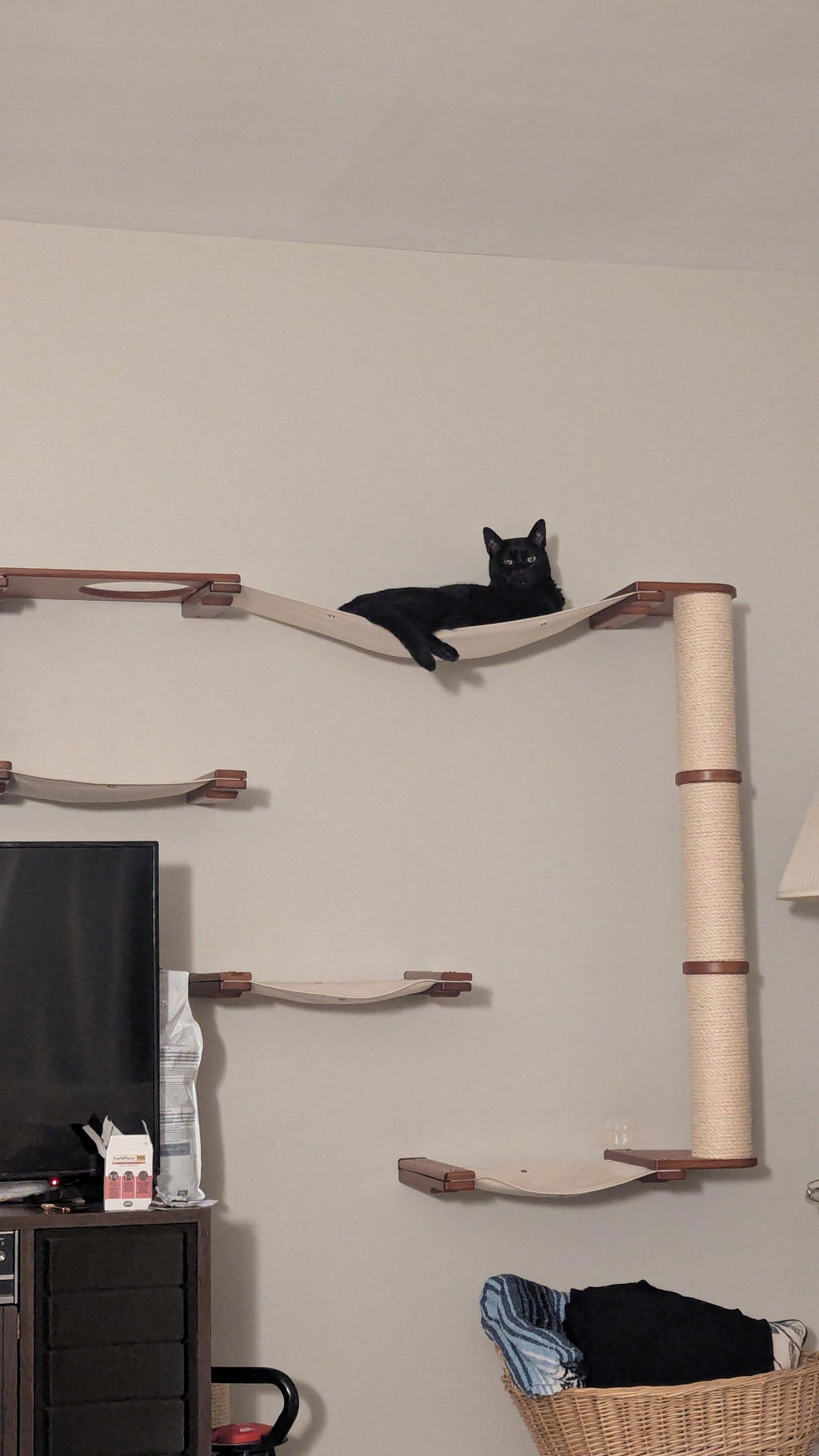
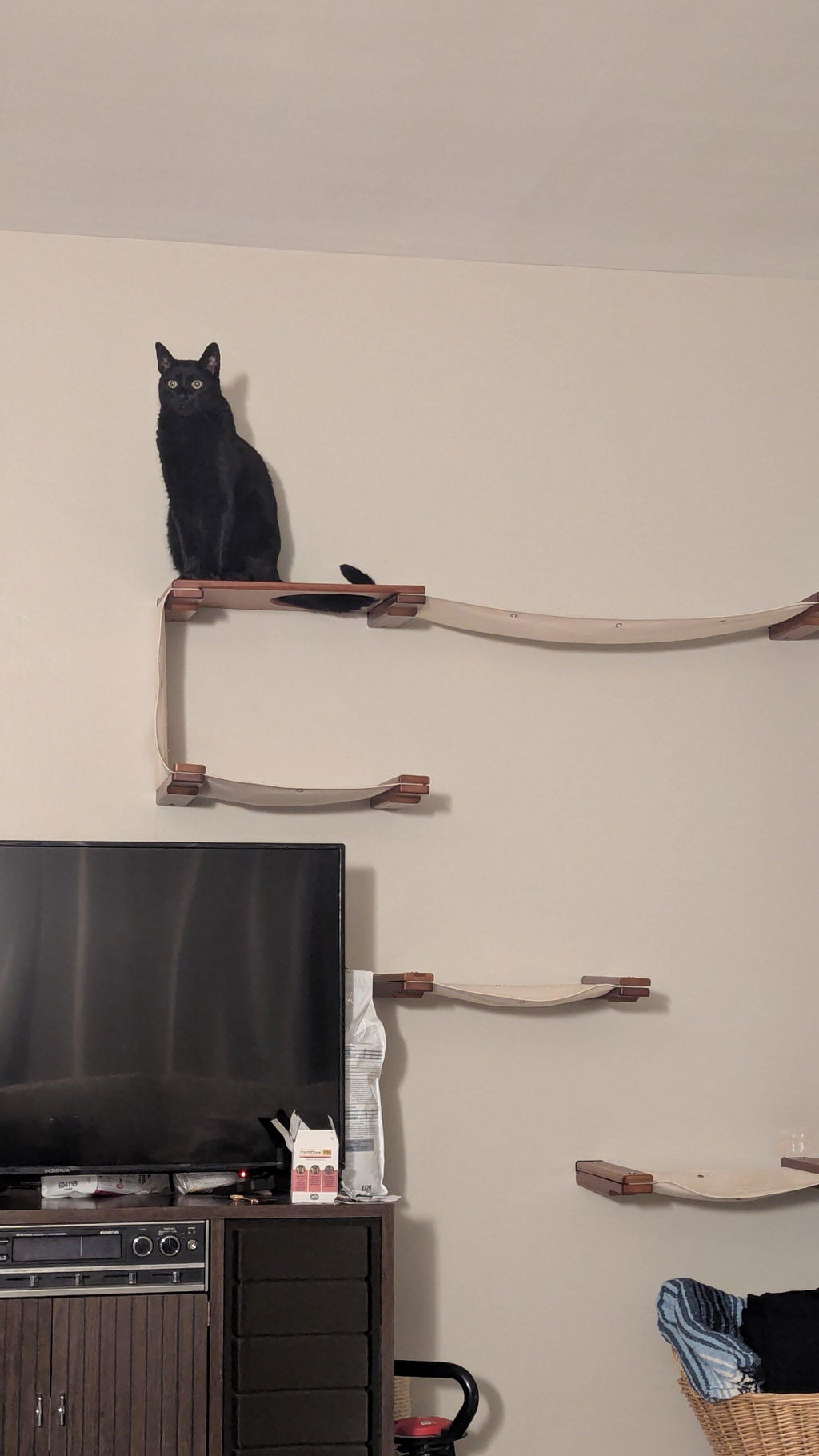
A nice touch to our furniture is how it fits together and has been carefully engineered to create multiple depths of walkways. This was a fun project we did for Lylah, who used to live with us when we were on our first generation of furniture. I love when walkways split off to create a closer resemblance to a tree they would have access to outdoors.

The Creative Corner
Corners can be difficult areas to install cat walls due to studs being irregularly placed, rather than in the middle of the wall where they're spaced 16" or sometimes 24" apart on center. But in a lot of homes, a corner cat tree is the best option due to furniture placement.
This is why we came up with our latest version of 34" shelves. Instead of holes to attach to the mounting planks, they use slots, so you have more versatility when it comes to where they're attached to the wall.

Floor to Ceiling Cat Tree FAQs
Where is it best to put a cat tree?
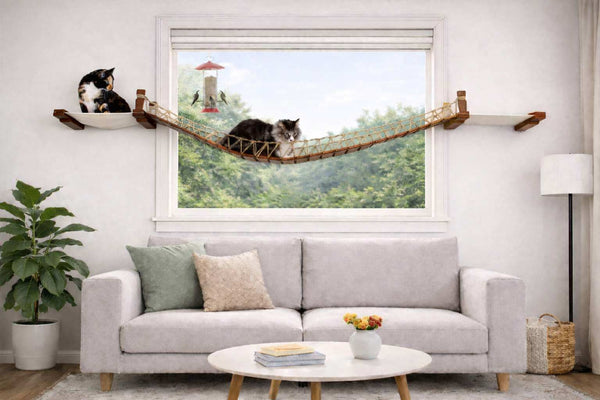
The best place to put a cat tree is where your cat already enjoys spending time, such as, near a window for bird-watching, in the living room to stay close to family, or in a quiet corner for shy cats. Avoid high-traffic areas that may stress them out.
How do you stabilize a tall cat tree?
Depending on the products used, you can use wall anchors and brackets to secure it firmly. When building a DIY floor-to-ceiling cat tree, make sure the base is heavy and balanced. Our modular wall mounted Sisal Poles will stabilize through the Mounting Planks that will be installed directly into studs.
Are wall-mounted floor to ceiling cat trees wobbly?
No they shouldn't be. A well-constructed floor-to-ceiling cat tree that is anchored into studs should feel secure. Freestanding towers may wobble if not weighed down or tightened properly.
How do I make my cat tree less wobbly?
Tighten all bolts regularly, add anti-slip pads under the base, and if possible anchor it to a nearby wall or ceiling. Wall-mounted designs should avoid wobbling entirely.
Are cat towers good for cats?
Absolutely! Towers and trees cater to a cat's natural instincts to climb, scratch, and perch safely above ground, improving both their mental and physical health.
Holding your little purring feline and gazing into those gorgeous eyes, it's easy to forget they are amazing little predators and have unique environmental needs to ensure good physical and mental well-being. If you want additional help building out a floor-to-ceiling cat tree specific to your space, reach out to our support team at support@catacreations.com, and see our Getting Started guide.
References
Ellis, S. L. H. (2009). Environmental Enrichment: Practical Strategies for Improving Feline Welfare. In Feline Enrichment.
Rochlitz, I. (1999). Recommendations for the housing of cats in the home, in catteries and animal shelters, in laboratories and in veterinary surgeries. In Feline Med Surg.